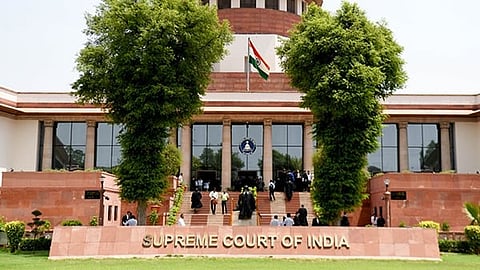

NEW DELHI: The Supreme Court Collegium, headed by Chief Justice of India Surya Kant, on November 24, 2026, recommended new Chief Justices for three High Courts.
The recommendations were made to fill the vacancy arising in Jharkhand on November 27, 2026, when the incumbent Chief Justice retires.
Justice Vibhu Bakhru, presently Chief Justice of the Karnataka High Court, has been recommended for transfer as the Chief Justice of the Jharkhand High Court.
Justice Bakhru was elevated as a judge of the Delhi High Court in 2013. He served in Delhi for more than a decade. In 2025, he was appointed as the Chief Justice of the Karnataka High Court. Now, within a year, he has been recommended to head the Jharkhand High Court.
To fill the vacancy in Karnataka, the Collegium has recommended Justice M.S. Ramachandra Rao, Chief Justice of the Tripura High Court, as the Chief Justice of the Karnataka High Court.
Justice Rao hails from the Telangana High Court. He was appointed as the Chief Justice of the Tripura High Court. He has previously served as a judge of the Telangana and Andhra Pradesh High Courts.
To fill the vacancy in Tripura, the Collegium has recommended Justice Vivek Singh Thakur, a judge of the Himachal Pradesh High Court, as the Chief Justice of the Tripura High Court.
The three recommendations are linked. Bakhru's move creates a vacancy in Karnataka, which Rao will fill. Rao's move creates a vacancy in Tripura, which Thakur will fill.
The Collegium's resolutions will be forwarded now to the Ministry of Law and Justice. After approval by the Centre, the judges will be notified and will take oath in their respective High Courts.
The Collegium's recommendations are aimed at filling vacancies in time and ensuring continuity in administration of the three High Courts.
Attachments:
