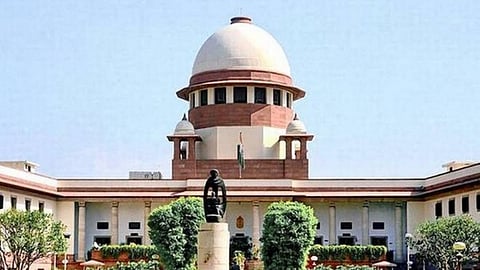

NEW DELHI: Stating that it shouldn't postpone pending elections "unreasonably", the Supreme Court on Wednesday said it is inclined to stay a Calcutta High Court order deferring the Kolkata Municipal Corporation (KMC) polls till the issue of ward delimitation is decided.
A bench comprising Chief Justice Surya Kant and Justices Joymalya Bagchi and V Mohana asked Solicitor General Tushar Mehta to seek instructions on the issue by November 30.
The KMC has undertaken a revision of municipal ward boundaries ahead of the next civic polls. As part of the plan, the number of wards in the civic body may rise to 209 from the current 144.
The high court had restrained the West Bengal State Election Commission from issuing a notification for the KMC election till a single bench disposes of a plea on ward delimitation.
"We are inclined to stay the impugned order for the reason that the factual and legal issues which have been highlighted, the division bench will pass a fresh order, an appropriate order.
"The writ petition before the single judge will be directed to be transferred to the division bench. And till the division bench forms a view the polls can be held off," the bench observed.
During the hearing, Justice Bagchi said,""We shouldn't postpone pending elections unreasonably."
The division bench of the high court had directed the State Election Commission (SEC) to not issue a notification for elections to the KMC till the disposal of a petition pending before a single bench.
Challenging the delimitation exercise, the petitioner, a former CPI-M councillor, sought a declaration stating that the entire exercise of determination of the number of KMC wards is void and the quashing of the September 11 gazette notification on expansion of wards is bad in law.
Dipu Das alleged that the delimitation exercise has been undertaken based on electoral rolls instead of the actual population, thereby excluding a substantial number of residents from consideration.
The petitioner claimed that the civic body had no elected council, and the corporation's former chairperson Smita Pandey had been appointed its administrator after the House's dissolution on June 8. He also sought an interim order of stay of operation of the delimitation notification and to restrain the SEC from issuing any notification calling an election to the KMC.
The single bench on October 29 refused an interim stay. Aggrieved by the refusal, Das moved the division bench.
The state government, the order had said, could empower its chosen administrator to make a tailor-made recommendation and then be bound by it, effectively allowing the government to recommend amendments to itself and undermining the provision's independence.
"Such puppetry cannot be compatible with the scheme of the KMC Act. The key feature of Section 601 of the KMC Act is the institutional autonomy vested in the Corporation in making a binding recommendation to the state government, which confers authority on the Corporation, an autonomous institution, to decide the delimitation of its own wards, in other words, its electoral constituencies," the order said.
It stated that the manner in which the corporation was dissolved mid-term, and an administrator was appointed, followed by "the hasty chronology of events thereafter" lent substance to the appellant's arguments "that there might have been a method in the madness".
The observations made in the division bench order came with a rider that they were "tentative in nature insofar as the final disposal of the writ petition is concerned."
