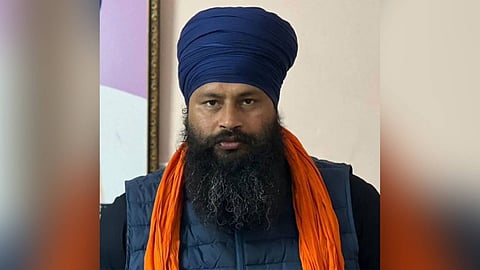

CHANDIGARH: The murder of anti-drug campaigner Parvinder Singh Jhota has exposed loopholes in the AAP-led Punjab government’s high-profile ‘Yudh Nasheyan Virudh’ campaign and renewed concerns over the pharmaceutical mafia, alleged regulatory lapses, political patronage and the unchecked sale of habit-forming drugs.
The government has since moved to intensify inspections of chemist shops and crack down on illegal sales. As per a drug inspector, the chemist shop owned by Ashwani Kumar, the alleged accused who shot dead Jhota, was raided 10 times in the past four years, and his licence was suspended on three occasions.
Punjab has around 16,000 retail and 8,000 wholesale chemist shops. The number of medical stores has grown over the years, particularly in rural areas, with some small villages reportedly having 10 to 15 shops.
Between April 1, 2025 and September 30, 2026, the state Health Department’s drugs wing conducted 16,788 inspections, including joint inspections of chemist shops and unlicensed premises. The licences of 520 chemists were suspended, and those of 22 were cancelled. Medicines worth Rs 20.6 crore were seized from 214 licensed and unlicensed firms for violations of the law.
Authorities also initiated 54 court cases against alleged offenders. In 35 cases, the accused were convicted and fined, while 650 cases are currently under trial in district courts across the state.
Acknowledging that some chemists continued to indulge in malpractice despite regulatory checks, State Health Minister Dr Balbir Singh has directed drug control officers of the Food and Drugs Administration to intensify inspections and take strict action against violators of the Drugs and Cosmetics Act, 1940, and the Drugs Rules, 1945.
Punjab Chemists’ Association general secretary GS Chawla said unscrupulous individuals in the trade brought disrepute to the entire pharmaceutical sector.
“This person was apprehended in 2023 and sent to jail for the unauthorised sale of prescription medicines. How was his licence not cancelled? How did he obtain an arms licence, and how was he able to continue his illegal drug trade? These are questions that need to be investigated,” he said.
Chawla said the government was aware of two to three such “black sheep” in every city but had failed to take sufficiently stringent action against them. The association supported action against chemists violating the law but cautioned against penalising those who followed the rules.
“While a few unscrupulous chemists indulge in wrongdoing, the majority follow the rules and should not be subjected to unnecessary inconvenience during the inspection drive. We have demanded stern action from the government," he said.
"We have also issued an advisory to chemists across the state, asking them to maintain proper records and ensure that medicines are sold only against valid doctors’ prescriptions,” Chawla added.
Jhota had confronted chemists over the alleged illegal sale of addictive and banned pills to young people. His killing has intensified concerns over enforcement of regulations governing habit-forming medicines, including pregabalin-containing capsules and tablets reportedly misused for intoxication.
The state government has flagged the misuse of pregabalin, a drug used to treat neuropathic pain and certain other conditions, whose capsules and tablets are reportedly being used by young people for intoxication.
The Health Minister said pregabalin was not covered under any schedule of the Drugs and Cosmetics Act or the Drugs Rules before a recent regulatory change.
“After the Punjab government took up the issue with the Central government, pregabalin was included under Schedule H1 of the Drugs Rules through a notification dated May 13, 2026. The provision is scheduled to come into effect on November 12, 2026,” he said.
Online medicine sales pose another challenge. The state government has flagged the absence of rules regulating e-pharmacies as a major hurdle in curbing the misuse of habit-forming drugs.
The government has expressed concern that medicines liable to be misused for intoxication are being sold online without adequate safeguards. The state has taken up the issue with the Union Health Ministry, but the former has yet to frame rules governing online medicine sales.
According to the latest report of the Narcotics Control Bureau (NCB), Punjab recorded the seizure of 8.95 lakh bottles of codeine-based cough syrup in 2025, the highest quantity among states in the country.
