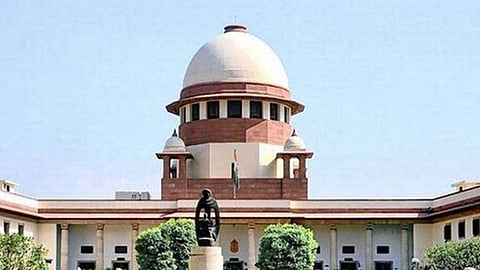

In a significant push to retain experienced and talented judges at the grassroots, the Supreme Court on Monday expressed it a satisfaction with the fact that 14 states have consented to raise the retirement age of district judicial officers from 60 to 62 years.
The Bench of the Supreme court, headed by the CJI Surya Kant and Justices Joymalya Bagchi and Vipul M. Pancholi, however, firmly shut the door on individual judges rushing to the apex court for personal extension.
Refusing urgent listing of pleas by judges who are about to demit office at 60 or have just retired, the CJI also clarified that "This pertains to the persuasive jurisdiction of this court. The issue is between the Supreme Court and the states."
The court said the larger policy question cannot be decided through individual petitions and noted that the main petition on service conditions is already listed and that is where the issue will be decided.
CJI Kant expressed hope that the remaining states will also fall in line, stating, "We are hopeful that others will also follow."
The proposal to increase the retirement age has been justified on grounds of judicial pendency, need for experienced hands, and uniformity across the country. District courts face over 4 crore pending cases and losing trained judges at 60 is seen as a drain.
The Supreme Court has been in dialogue with state governments and High Courts to build consensus, invoking its persuasive jurisdiction rather than coercive power.
The Bench underlined that it does not approve of judicial officers moving separate applications for extension of their own tenure, as that would create inequality and administrative chaos. The decision, the Court said, will apply uniformly once finalized, not case by case. The matter will be taken up again after responses from remaining states.
The Supreme Court has been monitoring compliance and persuading states to amend their service rules. The Bench said retention of judges till 62 will help in tackling arrears, provide stability in district judiciary and reduce frequent recruitment cycles.
Earlier in the hearing on September 4, the court had noted that it was necessary to stop attrition of experienced and talented judicial officers and to ensure access to justice and had directed seven states to formally increase the retirement age of judicial officers in district judiciary from 60 to 62 years, after their governments agreed to the proposal.
The three-judge bench of the apex court was hearing the All India Judges Association (AIJA) versus Union of India (UOI) case, seeking appropriate directions to increase the retirement age of district judges from 60 to years.
In this regard, the court had already noted that Chhattisgarh, Karnataka, Madhya Pradesh, Maharashtra, Sikkim, Tamil Nadu and West Bengal have consented to the proposal.
The order also covers officers who retired on or after March 31, 2026. They will be allowed to exercise option to return to judicial service if they have not taken up another job. Those who opt to return will receive consequential benefits, including pay, seniority and continuity, and will have to surrender post-retirement benefits already received.
The Court also asked the remaining states/UTs to reconsider their decision within two weeks.
The apex court had earlier asked Andhra Pradesh, Arunachal Pradesh, Assam, Bihar, Goa, Gujarat, Haryana, Himachal Pradesh, Jharkhand, Kerala, Manipur, Meghalaya, Mizoram, Nagaland, Odisha, Punjab, Rajasthan, Telangana, Tripura, Uttarakhand, Uttar Pradesh, NCT of Delhi, Jammu and Kashmir, and Puducherry to reconsider their decision on enhancing the retirement age and file a comprehensive report to it in two weeks and fixed the matter for hearing today.
