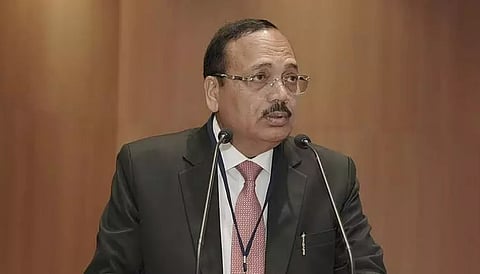

NEW DELHI: The BRICS Chief Justices’ Forum, which brings together chief justices, presidents of supreme courts and senior judicial leaders from BRICS member states and partner countries under one umbrella, commenced in New Delhi on Friday.
The Supreme Court of India—which was hosting the forum here from September 4 to 6 -- in the programme brought together chief justices, presidents of SCs and senior judicial leaders from BRICS (Building for Resilience Innovation Cooperation and Sustainability) member states and partner countries.
On Friday, CJI Surya Kant held bilateral meetings with senior judicial leaders from BRICS member states and partner countries. “The forum provides a platform for dialogue among the participating judiciaries and for exchange of views on contemporary issues relating to justice delivery, international dispute resolution, technology and sustainable development,” the SC said.
As part of the opening-day engagements, CJI Kant held a series of bilateral meetings with heads of judicial delegations from Russia, China, Egypt, Indonesia, the United Arab Emirates, Belarus, Kazakhstan, South Africa, Iran and Uzbekistan.
Among those who met CJI were Igor Krasnov, Chief Justice of SC of the Russian Federation; Zhang Jun, President of the Supreme People’s Court of China; Boulos Gahmy Iskander Boulos, Chief Justice of Egypt’s Supreme Constitutional Court; Sunarto, Chief Justice of SC of Indonesia; Mohammed Hamad Al Badi Al Dhaheri, President of the UAE Federal Supreme Court; and Andrei Shved, Chairman of SC of Belarus.
The bilateral discussions revolved around the issues of MoUs for judicial cooperation for strengthening relations between countries, the importance of mediation and arbitration in resolving business and corporate disputes, and creating a healthy environment for commercial activities between. The agenda was also the requirement of efficient commercial courts to enhance the trust of foreign investors and many more issues.
Recognition of awards
The conference also focused on the possibilities of mutual recognition of judicial awards and decrees and the use of state institutions like the National Judicial Academy, Bhopal, for exchange programmes and the exchange of the best legal practices of different countries.
