
NEW DELHI: With the aim of ensuring “zero waiting time” at toll crossings, the government expects to implement Multi-Lane Free Flow (MLFF), a barrier-free electronic toll collection system, across all states and Union Territories by March next year.
The new system is expected to improve toll revenue and fetch an additional Rs 10,000 crore annually.
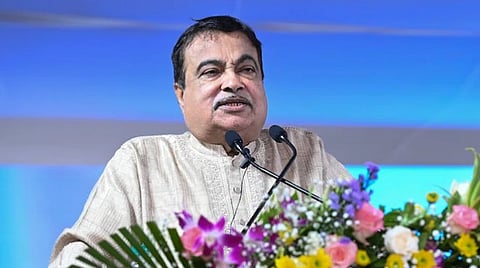
Speaking at the Global Fintech Fest 2026 in Mumbai on “India’s Intelligent Highway: Tolling and the Agentic Future of Mobility Finance”, Union Road Transport and Highways Minister Nitin Gadkari on Friday said the barrier-free toll collection system would also help reduce operational and maintenance costs.
“Zero stoppage is our target. We are moving towards a fully digital and barrier-free toll collection system for which we are using Fastag and ANPR (Automatic Number Plate Recognition) cameras. In one year, we want all toll plazas to be on the MLFF system. By December, 60-70 percent MLFF will be operational. Within the next two-three months, a barrier free toll system will be there at all toll plazas. It will reduce waiting to cross the toll point to less than 10 seconds. It will further reduce operational and maintenance cost, which is 12-15 percent at present. It is likely to come down to two-four percent and will benefit with Rs 6-7,000 crore,” said Gadkari.
There are around 1,200 toll plazas maintained either by the National Highways Authority of India (NHAI) or concessionaires.
On the occasion, Gadkari also launched ‘OneTag’, a NETC FASTag portability solution that enables users to switch their issuing bank while retaining the same FASTag.
Earlier, changing banks required users to purchase a new FASTag and remove the existing tag from their vehicle. The new system will work on the lines of mobile number portability, allowing users to change their bank while retaining the same FASTag.
‘OneTag’ is a joint initiative of Indian Highways Management Company Limited (IHMCL), a company promoted by the NHAI, and the National Payments Corporation of India (NPCI).
The ministry said the introduction of FASTag had already made travel on national highways more comfortable, which otherwise used to be a “painful experience”.
“The target was to make travel seamless, transparent and efficient. With a penetration rate of over 98 percent, so far, 13 crore FasTags have been issued. Toll collection through FasTag has increased. It has reached Rs 82,500 crore at present. This technology instruction has increased collection by Rs 6-7,000 crore. Earlier, waiting time at toll plazas was at 8-12 minutes and 30 minutes at some places,” said the minister.
Referring to the success of FASTag, Gadkari further urged stakeholders to conduct futuristic research to explore and suggest further uses of the technology.
