
So, was it crows, rocks, the sea, or forests? Maybe all of them had a vote.
The name Kakkanad has always made people tilt their heads in curiosity, much like the crows it’s supposedly named after.
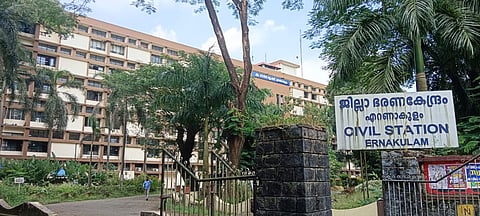
Today, the place is a world apart from the sleepy patch it once was. It’s the administrative headquarters of Ernakulam District, home to towering IT parks, and honking vehicles. Still, amid all the buzz, those questions stay afloat — where did the name come from?
A 92-year-old resident, Sarojini N R, who has lived here since 1975 remembers when Kakkanad was all forest and silence. There were hardly any houses, just trees and birds, she says. “Maybe that’s why people called it Kadu Nadu (land of forest).” Over the years, that name probably slipped into Kakkanad.
Thrikkakara municipality chairperson Radhamani Pillai adds a twist. “Long ago, Kakkanad was actually an island,” she says. “You had to take a boat to get here. Now, we have three KSEB offices, three post offices, one police station, and the Collectorate,” she says proudly. With 44 wards and nearly 78,000 residents, according to the 2011 Census.
For many locals, including Radhamani, the stories about the name are endless and entertaining. Some swear there were so many crows here once that people thought the birds had a permanent address. Others joke that Kakkanad was so unwanted back then, even the crows needed convincing to stay.

P Prakash, president of the Changampuzha Cultural Centre and historian, writes in his book Kochiyile Sthalanamangalude Charitram, that ancient inscriptions on statues from the Thrikkakara Temple, mention a place called ‘Kal Karai Nadu’. Just like Thrikkakara came from the story of Vamana, ‘Thiru-kaal-kara’ (the place of the holy foot), Kal Karai Nadu might have followed a similar idea, with kal meaning ‘foot’ and kara meaning ‘land’.
Prakash also thinks Kakkanad might have derived its name from its geographical connection to the sea. ‘The area was once close to the kadal (sea), and the term Kadal Kara, meaning ‘land near the sea’ could, over centuries of spoken use, have evolved into Kakkanad.”
Adding yet another version, Dr M C Dileep Kumar, former vice-chancellor of Kalady University and a long-time resident, says the name might come from the Tamil word ‘karka’, meaning granite. “Maybe the area used to have lots of rocky land, and the name came from that,” he says. He laughs when asked which version he believes. “There’s no official record. People have their own stories. Some even say it had more crows than humans. Maybe everyone’s right.”
In the old days, nobody wrote down place names. And that may be how Kadu Nadu, Kadal Kara, Karka Nadu or Kal Karayi Nadu might have all stumbled their way into becoming Kakkanad.