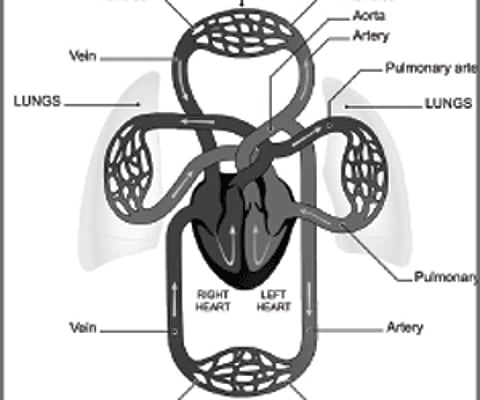

KOCHI: Veins carry blood from the peripheries to the heart. The venous system is a long network carrying impure blood to the heart and lungs for purification. The blood flow through the veins is slow and non pulsatile. Impure blood reaches the right side of the heart and is taken to the lungs for oxygenation.
The peripheral heart
What propels the blood back to the heart? The calf muscles - gastrocnemius and soleus by their pumping action, push blood back to the heart and is called the peripheral heart.
Valves in the venous system
In order to prevent blood which has been pumped to the heart from flowing back to the legs, there are valves which allow blood flow in one direction.
Varicose veins
There are superficial and deep veins which are connected by small perforator veins. Incompetence or leak of the perforator veins and the valves allow blood to ‘leak’ back into the peripheral veins, leading to dilatation and tortuosity of these veins — called varicose veins.
Treatment comprises special support stockings, medication, laser treatment, radio frequency ablative treatment, sclerotherapy, surgical ligation and stripping.
Deep vein thrombosis
Since it is a low pressure system blood flows slowly through the veins. Under certain circumstances if the work of the peripheral heart is impeded, the flow through the veins gets obstructed. Clots can form in the veins. This is most commonly seen in the deep veins of the legs.
Risk factors for venous disease
Smoking
Age
Liver disease
Oral contraceptive pills
Obesity
A history of DVT
Cancer or cancer treatment
Recent surgery or leg surgery
Existing clotting abnormality
Pregnancy or 2 months postpartum
Dehydration
Activity keeps the peripheral heart happy and working. Prolonged immobilisation causes pooling of blood in the veins, which predisposes to thrombosis. In such patients, blood thinning medication like heparin, anti-thrombosis elastic stockings and intermittent pneumatic compression devices which diminish chances of clot formation are recommended.
There are also conditions where the body has an increased tendency to form clots - which can be genetic or acquired. These are called pro - thrombotic states and include genetic polymorphism, malignancies, some drugs and sometimes during pregnancy.
Clinical manifestations
Deep vein thrombosis (DVT) presents with pain and swelling of the legs. The calf or thigh muscles are tense, tender and warm. Similarly veins in the arms can also get thrombosed.
Diagnosis is by compression ultrasonography and colour flow Doppler imaging. Blood tests like D-Dimer assay are also used.
DVT during air travel
DVT can also occur during long flights - sometimes called ‘economy class syndrome’ (due to cramped positions for long periods of time). Risk of deep vein thrombosis is low (about 0.05%) in persons who take a flight longer than six to eight hours.
How can we prevent this?
Drink lots of fluids, Get up and walk once an hour. Flex the calf muscles, rotate your ankles, point your heel and toe alternately and lift your knees whilst seated. These can prevent pooling of blood in the legs.
IVC thrombosis
Thrombosis can occur in inferior vena cava (IVC). It can be due to the conditions discussed above or due to obstructions to blood flow like webs or membranes.
Pulmonary embolism
Clots which form in the legs can migrate along the ‘road’ to the centre (heart) and cause a ‘traffic jam’ there. This interferes with the efficient functioning of the heart and blocks blood flow to the lungs. This is called pulmonary embolism. Depending on the size of the clots pulmonary embolism is classified into massive and sub-massive. This disease is a great mimic and mimics other commoner diagnoses like a heart attack or pneumonia, which have similar symptoms. Diagnosis is by ECG, Echocardiogram, chest X-ray, and ventilation perfusion scan. However, the gold standard for diagnosis is pulmonary angiography, either conventional or noninvasive by CT pulmonary angiogram. Treatment consists of clearing the ‘traffic jam’ by use of clot dissolving medications called thrombolytics in hospital. Chronic and recurrent pulmonary embolism leads to pulmonary hypertension and is known as chronic thromboembolic pulmonary hypertension.
Veins are silent couriers of blood to the heart. A little care of the veins can keep this beautiful system working faultlessly.