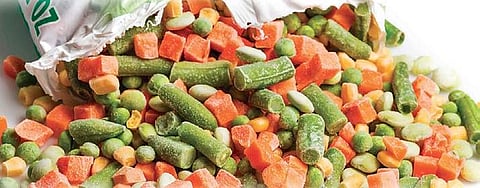

The debate on frozen foods has been heating up for a while. Are these foods nutritious? Are the chemicals in these foods causing an hormonal imbalance? Amidst this, CEO of Innovative Foods Limited Mithun Appaiah, says his brand Sumeru is trying to break the myth that ‘frozen is unhealthy’. And he does so through an Individual Quick Freezing Technology.
Many companies are into ‘heat and eat’ foods, but health practitioners advise against their consumption.
What’s your take?
We need to stop believing in the myths around frozen foods. Health practitioners say frozen foods are high on additives, preservatives and low on nutrition. But that’s not always the case. Freezing a crucial method. As a process, it involves minimal processing, high retention of nutrients, taste texture and freshness, making it one of the safest methods of food preservation without any additional preservatives.
People assume fresh market produce is better, but it’s not always true. Fresh items are good to look, but these actually reach the consumer a good 15-20 days post-harvest. As a result, nutrition gets destroyed due to pollution, improper storage conditions and slow transit.
Is there any way to check the nutrition value in frozen foods?
One of the biggest advantages for frozen foods is the use of Individual Quick Freezing (IQF) technology, also called flash-freezing. It separates the food items after freezing. Simple freezing leads to the formation of large ice crystals in the cells of the product/produce, thereby leading to loss of nutrients, texture and taste. But IQF prevents that.
How accepting has India been of ‘heat and eat’ foods?
The processed and frozen food market has witnessed a steady growth the world over, particularly in developing Asian countries. India’s frozen food market that stood at $310 million in 2017, is projected to grow to $754 million by 2023. In our country, Kochi and Hyderabad have the highest demand for frozen foods.
How much has the frozen food segment changed in the last two decades?
Research shows that with an increase in fast-paced lifestyle, double income homes, women joining the workforce and young professionals living alone, the consumption of frozen foods has also increased dramatically.