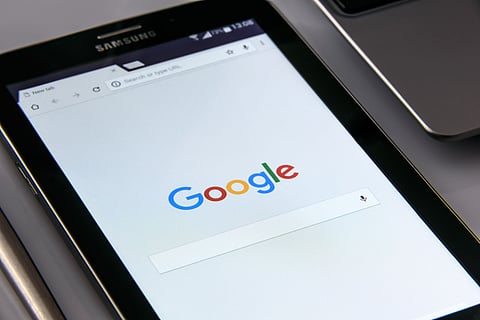

It is a scene played out in millions of bedrooms across the globe: the clock strikes 3:00 am, and a minor physical twitch or a persistent sneeze triggers a wave of late-night anxiety. Within three clicks, the digital oracle, Google, has transformed a common headache into a rare, terminal neurological event. We have entered the era of "Dr Google," where the most common medical degree is obtained without NEET or an MCAT, and the "invisible intern" of search algorithms sits in the consultation room, whispering into the patient’s ear.
In a recent, illuminating dialogue on the Health Podcast: Search Engine vs. The Stethoscope, the eminent Prof. Dr Pandiyan Natrajan, a veteran with over five decades of medical practice, shared a refreshing and perhaps counter-intuitive perspective on this digital revolution. Rather than viewing the search engine as a disruptive intruder, he suggests it is time we reintegrate the "patient’s story" with the "digital whisper" to improve care.
The Informed Patient: Asset or Adversary?
The traditional hierarchy of medicine often viewed the questioning patient with suspicion. However, Dr Pandiyan Natarajan argues that in the modern healthcare ecosystem, the patient remains the most important person. "How could we be worried about an informed patient?" he asks. While misinformation is rampant in every field, a patient arriving with questions is not an adversary; they are a partner in care. This inclusivity fosters a sense of comfort, moving the patient from a passive recipient of care to an active participant. The doctor’s role has shifted from being the sole gatekeeper of knowledge to a guide who helps the patient navigate the overwhelming sea of data.
The Trap of "Half-Knowledge" and Self-Treatment
There is an adage that a little knowledge is a dangerous thing. Yet, after 51 years in obstetrics and 45 years in infertility, Dr Pandiyan offers a humbling correction: all knowledge is, in some sense, "half-knowledge". Even the most advanced research has yet to fully decode the mysteries of the smallest human cell, the sperm, or exactly how it enters the egg. "Knowledge is always inadequate," he observes, noting that what was considered gospel 20 years ago is often obsolete today.
The real danger, therefore, is not "half-knowledge" but self-treatment. While self-diagnosis is a natural human instinct—one even medical students succumb to when they imagine they have every disease they study—taking the leap into self-prescribed remedies is where the "real pain point" sits. Whether it is a "kashaim" for infertility or unverified supplements, bypassing professional guidance for self-treatment ignores the "many facets" of a clinical condition.
The Flaw in the Algorithm
One of the most pressing critiques of the digital health age is the way search algorithm’s function. Why does a search for a headache so often lead to a brain tumour result? Dr Pandiyan points out that Search engine, at its core, is a commercial venture. Its algorithms prioritise "hits" and advertiser engagement over clinical accuracy. To remedy this, he suggests a radical but scholarly redesign: search results should prioritise professional medical societies—such as the International Headache Society or the British Medical Association—perhaps even in alphabetical order, rather than by popularity. These bodies periodically revise their guidelines based on evolving evidence, unlike static, click-driven articles that may remain online long after their information is proven wrong. By directing users toward "authorised bodies," the digital search could become a tool of reliability rather than a source of paranoia.
The Right to Challenge: Medicine as a Consumer Service
In a provocative stance on the doctor-patient relationship, Dr Pandiyan encourages patients to challenge their physicians. "You are a consumer... and a consumer has every right to challenge what is being sold to them," he asserts. This is particularly vital when it comes to surgery. He advises patients never to blindly accept a surgical recommendation but to ask: "Is it mandatory? Can I survive without it?".
Drawing on his long career, he recalls how duodenal ulcers were treated primarily through surgery in the 1970s and 80s, whereas today, medical treatment is the norm. Because medical evidence is constantly in flux, a patient who brings a second opinion or challenges a diagnosis with evidence is not an offence to the doctor; they are a catalyst for the doctor to "reinforce" or "correct" their own opinion. A doctor "worth his salt" should welcome a second opinion, as the ultimate goal is the best possible care for the patient.
The Anxiety of Choice
For many, the problem with Dr Google is not a lack of information but a "plethora of choices". Much like a diner struggling with an extensive restaurant menu, a patient in pain often finds it difficult to choose between the myriad of possibilities presented by a search engine. In moments of physical suffering, a direct prescription from a trusted physician can be far more comforting than a list of twenty differential diagnoses.
Dr Pandiyan acknowledges that doctors often lack the time to explain every detail, which makes seeking reliable outside information necessary. However, he warns against relying on "popularity" or "ratings" when choosing a doctor, as these can be artificially hyped. Instead, he advocates for the old-fashioned "word of mouth" and finding professionals of high calibre and seniority who can provide a grounded perspective amidst the digital noise
The Irreplaceable Stethoscope
As Artificial Intelligence (AI) and search engines become more sophisticated, a looming fear persists: will the machine eventually replace the physician? Dr Pandiyan’s answer is a resounding "no," and the reason lies in a single word: emotion
While an AI can conduct a "structured interview" and parse data, it cannot judge a mood or sense the subtle nuances of human feeling. "A machine cannot so easily judge... your inner feelings," he explains. The "gut instinct" developed over decades of looking at human faces and hearing human stories is something a text-based output can never replicate. The stethoscope is not just a tool for listening to the heart; it is a symbol of the physical, emotional connection between two humans—a connection that requires presence, empathy, and a shared sense of humanity.
In the end, the solution to the "Search Engine vs. The Stethoscope" debate is not to delete our search history or shun technology. Rather, it is to use the web as a starting point—a way to become "well-informed"—while relying on the physician to provide the "clinical diagnosis" and the emotional support that no algorithm can generate.
Google may have a billion pages of information, but it lacks a pulse. It can give you options, but it cannot give you care. As we move forward, the goal for both doctors and patients should be to move past the paranoia of the 3:00 AM search and toward a partnership where data serves the story, and the stethoscope remains the final word in healing.
Arun Kumar Chokkappa
M.S. Neuroscience
Author (An Architect’s Dilemma)
