
As a kid, when I read the poem The Windmill by Henry Wandsworth Longfellow, I planted a desire in me to see them in their natural setting as a statue of beauty. And I knew that Netherlands is the country where they exist in abundance — in the 16th and 17th century they were used for grinding and for pumping water in the rural areas.
So, while chugging from Paris to Amsterdam, I glued my eyes to the window, not wanting to miss the glimpse of any windmill that we went past. I was not disappointed, sighted a few of them during the journey through the picturesque Dutch country, though all of them presumably were non-operational, standing there — a silent witness of the bygone era. Apart from the windmills, the Netherlands, or Holland as some fondly call it, is famous for its tulips, cheese and beer in addition to its impressive architecture, art, culture and people. Nearly all of them are able to communicate in English, which was a welcoming change when arriving from Paris.
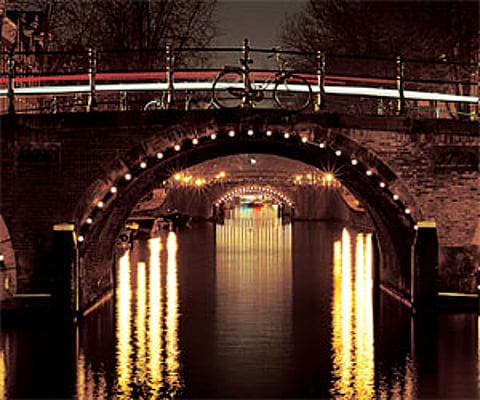
Amsterdam, the capital of the Netherlands, is often called the ‘City of Canals’. Several narrow concentric canals that flow through the heart of the metropolis at a pace as leisurely as the lifestyle on its banks, delineates a character that perhaps make similar European cities such as Venice and Bruges envious. Take a canal cruise for a view of Amsterdam from the water. While streaming under several pretty bridges, you will go past the canal houses that generally determine the Amsterdam cityscape. Usually built as residence of the wealthy, they are characterised by narrow, relatively tall facades, often crowned by richly ornamented gable tops to hide the saddle roofs from view.
The tour guide will surely show you the house of Anne Frank, an inside tour of which is almost mandatory for any first timer to Amsterdam. It draws over a million visitors every year to see how a lanky, smiling 13-year-old Jewish girl and her family hid in the rear annexe of that house for over two years to escape deportation by the Nazis during the World War II.
The Germans finally found them in 1944 and were sent to the death camps. The tour was so moving that it brought lumps in my throat. During hiding, Anne wrote her thoughts in a diary which was later discovered, and became the journal of the 20th century. Since then, it has been translated in 60 languages with over 20 million copies sold worldwide. Movies were made and several stageplays have been performed, for the world to know the thoughts of a teenager shrouded in fear with a hope to survive in an oppressive environment. Pitching on this touching storyline even Shabana Azmi, Nandita Das and Zohra Sehgal staged a play, The Spirit of Anne Frank, in India in 2002. Amsterdam derived its name from a 12th century dam being built on River Amstel to transform an obscured fishing village to a bustling conurbation.
Today, the original site of the dam, called Dam Square, is the central location to start exploration of the city. It is close to the Central Railway station where
Factfile
The cheapest way of exploring the city is to rent a bike and wheel away. Alternatively there are buses, trams and metro that take you to all tourist attractions. KLM, Netherlands national airline, flies to Amsterdam from many Indian cities (www.klm.com).
Accommodation: There is no shortage of hotels in Amsterdam, but they are, in general, expensive. Hotels suggested here offer good quality accommodation but for best rates check out their websites. Hotel Nova (www.novahotel.nl) is centrally located near Dam Square, Hotel Max, a small family place in the museum quarter (www.hotel-max.tobook.com) and Hotel XXX for hostel type accommodation.
Cuisine: Traditional Dutch food is hearty and wholesome, potatoes dominating the cuisine. Try Hutspot meaning hotchpotch is a stew of braised meet with mashed potatoes and carrots and Patat, which is French fries served with maonnaise. Thai, Chinese, Italian and Indian dishes are also available.
Visa: Indian citizens can travel to the Netherlands on a tourist visa from Dutch Embassy in New Delhi or from one of the consulates in Mumbai, Kolkata and Chennai. For more information, log on to www.amsterdamtourist.nl trains from other European cities arrive. It is also a place from where one can take trams to other parts of the city. The 17th century Royal Palace, Madame Tussauds Museum and the National Monument are the jewels of the cobblestoned square, where every inch of the space, if not occupied by tourists, is taken over by flocks of pigeons.
The city’s oldest and country’s most famous basilica, the Oude Kerk, is not far away. However, some feel uneasy visiting this 14th-century iconic site as it is next to Amsterdam’s (in)famous Red Light district where scantily-clad sex workers tempt customers by displaying themselves in glass windows under red neon lights.
Prostitution is legal in Amsterdam. Gays and lesbians can enjoy wedded bliss and ‘coffeeshops’ welcome customers for smoking dope instead of drinking a cappuccino or a latte for which you may have to visit a ‘coffeehouse’. “We prefer doing things openly, that others do covertly, ” said John Van Essen, the manager of a doping joint.
And when the Dutch say café they mean a pub, the historic ones called brown café are characterised by dark wooden panelling, dim lighting and thick tobacco smoke.
For a fairly small city, Amsterdam surprisingly has large number of museums and galleries and the ones that cannot justify a miss are the famous Rijksmuseum, where the most celebrated display is Dutch master Rembrandt’s legendary work Night Watch. The next door Van Gough Museum presents the Dutch impressionists most comprehensive collection including his famous Sunflowers and the Potato Eaters.
If you love flowers, go to Bloemenmarkt — a floating flower market on the Eastern canal ring where you are sure to be awe-struck with the colourful display of seasonal blooms. And if you have time, do not miss a trip to Aalsmeer, an hour away from Amsterdam, to witness world’s largest flower action.
There are several easy excursion options available from Amsterdam, all of which takes less than couple of hours to reach by train or bus. Visit Hauge, the home of the Dutch parliament, the Royals and the diplomats and Rotterdam — Europe’s largest port city bustling with activities day and night. If windmills are a fancy, go to Kinderdijk, where there are 19 windmills. Netherlands is famous for its blue and white porcelain products, popularly known as Delftware as it comes from a place called Delft.
It’s a good place to buy souvenirs such as miniature canal houses, plates and windmills. If you want to go Dutch in Netherlands, you’ll need your own set of wheels. Bicycles are part of Dutch life, it appears the whole nation speeds on it despite having a very efficient public transport system comprising of trams, buses and metros. So be prepared to bike in the dyke.
—sandiphor@hotmail.com