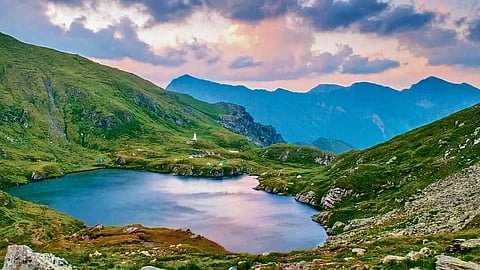

North Sikkim’s Green Lake Trek has reopened after a four-year closure, restoring access to one of the region’s most challenging high-altitude trekking routes. The reopening was facilitated with the support of the Lachen Dzumsa, the traditional local governing body and Lachen-based operator Khangri Tours, Treks and Expedition. Located at approximately 5,050 metres above sea level, Green Lake lies at the base of the eastern face of Mount Kanchenjunga, offering trekkers an opportunity to explore the region’s glacial landscape, alpine vegetation and mountain scenery. The expedition begins in Lachen, about 107 km from Gangtok and takes approximately 10 to 12 days, including travel and acclimatisation. The challenging route follows the Zemu Glacier, passing through Talem, Jakthang, Yabuk and Rest Camp before reaching the lake. Trekkers move through rhododendron forests, alpine meadows and glacial moraines, with views of Mount Kanchenjunga and Mount Siniolchu along the way.
Depending on the season and conditions, the landscape also offers opportunities to spot Himalayan flora such as blue poppies and primulas, while wildlife sightings may include Himalayan blue sheep, red pandas and, more rarely, snow leopards.
Reaching Green Lake (around 4,935-5,050 metres/16,190-16,568 feet) feels like stepping onto a raw, expedition-style amphitheatre in the High Himalayas. You get unobstructed 360-degree views of Simvo, Kirat Chuli, Mount Twin Peaks and peaks straddling the Indo-Nepal border. You also stand directly at the base of the world’s third-highest peak. Unlike distant views from Darjeeling or Gangtok, Kanchenjunga’s massive ice walls and ridges tower straight above the campsite.
A day in Lachen before setting off can be spent exploring Lachen Monastery, also known as Ngodub Choling. The 19th-century Nyingma monastery sits above the village and offers a glimpse into the region’s Buddhist traditions. Its quiet surroundings also make it a suitable stop for a gentle walk while preparing for the expedition. Visitors can explore Lachen’s traditional settlement, interact with local communities and take in views of the surrounding mountains before heading toward the trailhead.
The journey from Gangtok to Lachen is an experience in itself. The five to six-hour drive follows the North Sikkim Highway, with several places worth stopping at along the way. Near Mangan, Singhik Viewpoint offers panoramic views of Mount Kanchenjunga and Mount Siniolchu. Further along, the Seven Sisters Waterfalls and Naga Waterfall make for convenient roadside breaks. Their water flow is particularly impressive during the monsoon and post-monsoon months. Another worthwhile stop is Chungthang, where the Lachen Chu and Lachung Chu rivers meet. The confluence is associated with guru Padmasambhava and holds religious significance for the local Buddhist community.
Once back in Lachen after the trek, travellers can explore more of North Sikkim’s high-altitude landscapes. Gurudongmar Lake, situated at approximately 5,430 metres, is among the highest lakes in the world. Reached via Thangu Valley, the lake is known for its striking blue-green waters, surrounded by barren mountain terrain and snow-covered peaks. The drive also takes visitors through Chopta Valley, an alpine landscape that changes considerably with the seasons. Frozen streams and snow-covered stretches characterise winter, while spring brings flowering meadows and rhododendrons.
Another excursion worth adding to the itinerary is Lachung and Yumthang Valley, in the neighbouring valley. Known as the Valley of Flowers, Yumthang is particularly popular in spring, when its meadows come alive with seasonal blooms. The nearby Shingba Rhododendron Sanctuary is home to several varieties of rhododendrons. Travellers can also visit the natural hot springs in the valley, while those keen to venture further can continue toward Zero Point (Yumesamdong), where the road ends amid snow-covered mountain scenery. Winter visits offer a different experience, with snow transforming the range.
