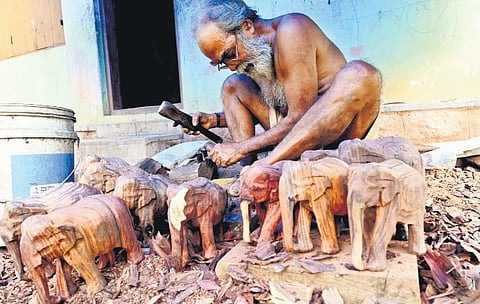

The ever-transforming cultural landscape of India is deeply ingrained in its rich and diverse heritage. A country with centuries of history, India boasts of an extraordinary range of art forms—from intricate textile traditions and regional painting styles like Madhubani and Warli, to pottery, woodwork, metal crafts, and hand embroidery, among many others. Today, contemporary art, fashion, and luxury are not only looking at this legacy through a fresh lens but are also actively involved in reinventing and reviving India’s cultural craftsmanship in ways that are both innovative and globally resonant.
One prominent example is the recently unveiled flagship store by Sunita Shekhawat in Jaipur, which not only retails luxury jewellery but also houses a dedicated museum to the art of meenakari, an ancient technique of enamelling. Set within a red sandstone structure that pays architectural homage to Rajasthan’s cultural history and craftsmanship, the space seamlessly merges tradition with contemporary luxury. The museum narrates the story of meenakari’s journey in India. Here, meenakari is brought into contemporary relevance, not as a museum relic, but as a living tradition.
Similarly, initiatives like the Chanakya School of Craft are reimagining the potential of traditional skills through collaboration. Known for its commitment to reviving hand embroidery through education and empowerment, the school collaborated with artists Manu and Madhvi Parekh and global fashion house Dior in 2022. The outcome was a testament to the transformative power of cross-disciplinary engagement—a project that brought together fine art, embroidery, and fashion in a way that not only elevated the artisan’s work but reframed how global audiences perceive Indian craft.
Another institution that is playing an important role in this cultural shift is India Art Fair, which has become a critical platform for conversations around the intersection of heritage and innovation. Whether it’s showcasing Gond and Bhil painters alongside contemporary visual artists or hosting panels on sustainability and textile revival, or showcasing institutions like Delhi Crafts Council, the fair is shaping a narrative where heritage and innovation are not at odds, but in dialogue. Through curated panels, exhibitions, and collaborations with craft-led institutions, the fair serves as a bridge between India’s artisanal legacy and its contemporary creative expressions, fostering visibility for traditional art practices. This has turned the fair into a vital platform, not only for collectors and curators, but also for cultural institutions, craft organisations, and younger audiences curious about India’s evolving creative identity.
Together, these movements reflect a broader transformation. Indian craftsmanship is not simply being preserved in museums or archives but is being redefined in myriad ways. Through contemporary art, fashion, and luxury, India’s rich craft heritage is being translated for a new generation, not as a distant memory, but as a living, evolving force that is celebrated.
