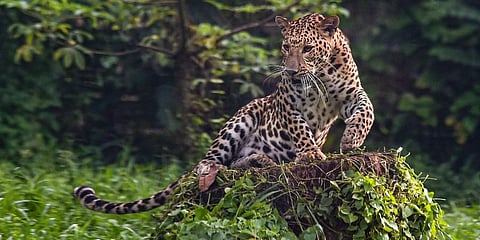

NEW DELHI: According to a report based on the fifth cycle of the leopard population estimation conducted in 2022, India's leopard population is estimated at 13,874 (range: 12,616 to 15,132). A survey conducted over a similar area in 2018 estimated their population at 12,852 (12,172 to 13,535).
Except, Shivalik Hills and Gangetic Plains, all the regions witnessed a rise in population.
The decrease in population in Shivalik Hills and Gangetic Plains Landscape is due to rising tiger numbers as it caused predatory pressure on leopards. However, in this landscape, 65% of the leopard population is present outside protected areas, which will lead to increase in human-wildlife conflicts. In Uttarakhand, 30% of all human deaths and injury cases by wildlife were caused by leopards in the past 5 years.
The National Tiger Conservation Authority (NTCA), in collaboration with state forest departments and coordinated by Wildlife Institute of India (WII) conducts comprehensive assessments of tiger habitats, which also include data on leopard density and abundance.
The population estimation report ‘Leopard Status 2022’ shows that the population growth in common area from 2018 to 2022 across India was 1.08 % annually. In the Shivalik Hills and Gangetic Plain it declined by 3.4%/annum, while Central India and the Eastern Ghats recorded a growth of 1.5%.
“The population in the last four years is stable, which also indicates the growth is minimal and in comparison to tigers, its population is getting impacted by people in multiple use areas,” said Bhupendra Yadav, Union Minister of Environment, Forest and Climate Change while releasing the report.
The Indian leopard, despite being listed in Schedule I of the Wildlife (Protection) Act, 1972, is classified as “Vulnerable” by the IUCN Red List. The leopard population face significant threats including habitat loss, fragmentation, human-wildlife conflict, poaching, and illegal trade.
In Central India and Eastern Ghat, Approximately 68% of the leopard population exists outside the Protected Area. Madhya Pradesh holds the largest leopard population in India followed by Maharashtra which signifies that tiger conservation measures are also helping the co-predator’s recovery.
More than 65% of the leopard population is present outside the protected areas in the Western Ghats landscape.
The site wise leopard population is higher in NagarjunasagarSrisailam, Panna, Sariska, Satpura, Melghat and Kanha Tiger Reserves.
The report also underlined genetic diversity among leopards across landscapes, with central India exhibiting the highest diversity. The leopard densities are higher in the Tiger Reserves compared to outside protected areas, despite the fact that tigers exert regulatory pressure on leopards.