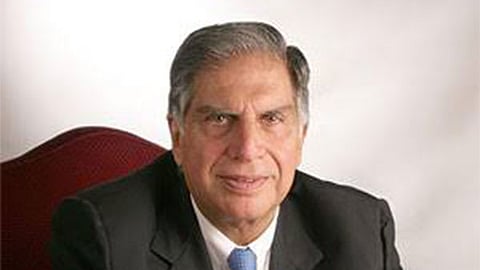

NEW DELHI: From acquiring a struggling British auto company and turning it around to launching the most affordable passenger car Nano, Ratan Tata, while being at the helm for 21 years, transformed the Tata Group into the global powerhouse it is today, expanding into diverse fields such as steel, automobiles, IT, and telecommunications.
His tenure from 1991 to 2012 (and briefly from 2016 to 2017) was marked by big acquisitions, including Jaguar Land Rover (JLR), Tetley, and Corus, which positioned the Mumbai-headquartered conglomerate on the world stage.
The industrialist passed away on Wednesday at the age of 86 in Mumbai.
While Tetley’s acquisition may not be as big as that of JLR or Corus, it certainly holds greater importance in making Tata a global brand. Ratan Tata led the acquisition of Tetley in 2020, which was then thrice as big as Tata Tea, for $430 million. The acquisition set the tone for a series of global acquisitions to follow.
It was also around this time when Tata Motors’ passenger car division was rapidly becoming a household name, thanks to the thunderous success of the hatchback Indica (launched in December 1998). Tata Motors in no time became a tough competitor to Japanese, American and Korean car companies.
He also led the public listing of Tata Consultancy Services (TCS) in 2004 by launching India’s first $1 billion IPO by a private-sector company. At present, TCS is Tata Group’s most valuable and India’s second-largest company (in m-cap terms).
Fast forward to 2007, Tata Steel made global headlines with its $12.9 billion acquisition of the UK-based steel major Corus. Steered by Ratan Tata himself, it remains one of the largest acquisitions by an Indian company. While this purchase made Tata Steel one of the biggest steel producers in the world, it is often termed a not-so-successful venture for the conglomerate.
However, the group’s acquisition of Jaguar Land Rover from US-based Ford Motor in 2008 for $2.3 billion truly helped the conglomerate to establish itself on the global stage. The magnificent turnaround of JLR has made the brand a force to reckon with in some of the world’s auto biggest markets such as the USA, China and Europe. The acquisition and turnaround was also a personal achievement for Ratan Tata himself given his attempt to sell Tata Motors’ passenger car division to Ford in 1999 was mocked by a few American executives.
Ratan Tata also conceptualized and spearheaded the ambitious Tata Nano car project. Aimed to provide a secure mode of transport to the average Indian consumer at an affordable price, Nano was a big success at the time of launch. However, Nano’s sales declined in the years to follow as consumers started giving preference to bigger cars.
He also monitored the group’s hospitality business and kept the Taj brand of hotels among the most luxurious stays in the world. It was also under his reign that Titan ventured into new categories and became one of the most recognized consumer brands in the country.
While Ratan Tata’s contribution to growing the Tata Group cannot be realized numerically, revenue growth of 40 times and profit growth of 50 times in his 20 years or rein shows how influential he was in shaping the Tata Group that was established in 1868.
Tata now has its products and services in over 150 countries, and operations in 100 countries. It has 29 publicly listed Tata Group companies with a combined market capitalisation of $403 billion as of 20 August 2024.
