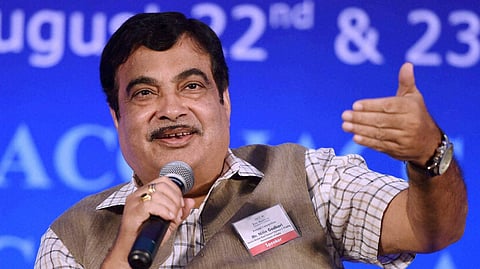

NEW DELHI: Union Minister for Road Transport and Highways Nitin Gadkari on Monday reaffirmed the Government’s commitment to advancing ethanol blending and biofuel initiatives.
Highlighting the success of ethanol blending in India, Gadkari noted that ethanol blending in petrol has surged from 1.53 per cent in 2014 to 15 per cent in 2024, with a target to reach 20 per cent by 2025. Research is underway to explore blending 15 per cent ethanol in diesel as well, as part of the government’s strategy to reduce fossil fuel dependency, said the minister.
He was speaking at the 12th CII Bioenergy Summit 2024 themed “Fuelling the Future - Securing India’s Green Growth Goals” in New Delhi.
He further emphasised the creation of an ethanol ecosystem, which includes the establishment of 400 ethanol pumps by Indian Oil Corporation in four states—Karnataka, Tamil Nadu, Uttar Pradesh, and Maharashtra. With plans to launch flex-engine cars that run on ethanol, discussions with leading automakers are ongoing and prominent manufacturers of two-wheelers are preparing to launch ethanol-powered bikes once the infrastructure is ready, the minister added.
“We are fast-tracking efforts to increase ethanol production and distribution in these four key states,” said Gadkari. He further added that these initiatives align with India’s broader biofuel goals, positioning the country as a leader in sustainable energy solutions.
He further discussed the importance of leveraging waste-to-energy technologies, especially in the production of bio-CNG from rice straw, which has proven viable across 475 projects, with over 40 already operational in states such as Punjab, Haryana, Western Uttar Pradesh, and Karnataka.
The minister also called for further research into efficient biomass sources and cost-effective transportation of biomass.
Addressing the environmental challenge of stubble burning in Punjab and Haryana, Gadkari praised Indian Oil’s Panipat plant, which is converting agricultural waste (parali) into biomass.
“At present, we are able to process one-fifth of the parali, but with proper planning, we can significantly reduce the seasonal air pollution caused by stubble burning,” he said.
He stressed the urgency of reducing India’s annual fossil fuel import worth Rs 22 lakh crore, particularly amidst global geopolitical uncertainties. “Biofuel is key to India’s energy self-reliance, boosting the agricultural economy, and ensuring prosperity for our farmers,” he said.
