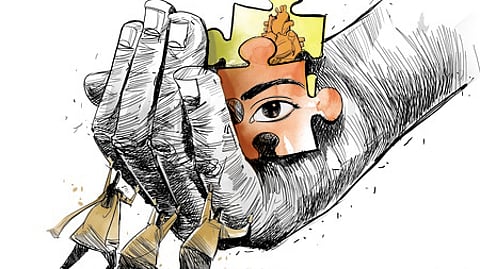

NEW DELHI: As many as 18,911 organ transplants were performed last year in India, which continues to face an acute shortage of organs for transplantation, a latest government report said on Saturday.
The report, released by Union Health Minister JP Nadda, said that although the number of transplants in India has significantly increased from 4,990 in 2013 to 18,378 in 2023, and 18,911 transplants in 2024 from January to December, the organ donation rate remains low at less than 1 per million population.
“This starkly contrasts with the highest in the world at around 48 per million population in Spain,” it said.
India ranks third in the world, after the United States and China, in terms of total organ transplantation, and first in terms of total living donor organ transplantation.
The annual report by the National Organ and Tissue Transplant Organisation (NOTTO) under the Union Health Ministry also showed that Tamil Nadu and Delhi performed the maximum number of heart, kidney, lung and liver transplants.
Over 63,000 individuals currently need kidney transplants, and around 22,000 need liver transplants in India.
In 2024, there were 13,476 kidney transplants in the country, the highest number of which were performed in Delhi, followed by Tamil Nadu, Maharashtra, Kerala and West Bengal.
Similarly, there were 4,901 liver transplants. Delhi reported the highest number of liver transplants, followed by Tamil Nadu, Maharashtra, Kerala and Telangana.
A total of 253 heart transplants were performed in the country. The highest number was in Tamil Nadu, Karnataka, Gujarat, Telangana and Maharashtra. Delhi was in sixth place.
In lung transplants, 228, Tamil Nadu again reported the highest number. It was followed by Telangana, Karnataka, Maharashtra, Gujarat and Delhi.
Just 44 pancreas transplants were carried out, and Chandigarh conducted the most, followed by Karnataka, Madhya Pradesh, Tamil Nadu and Gujarat.
Only nine small bowel transplants were carried out. Tamil Nadu (6) reported the highest number, followed by Karnataka and Maharashtra.
As is the norm, more women pledged their organs as compared to men in 2024 as well.
Speaking at the 15th Indian Organ Donation Day organised by NOTTO, Nadda said, “India achieved a remarkable milestone of performing over 18,900 organ transplants in 2024, the highest ever recorded in a single year, a significant leap from fewer than 5,000 transplants in 2013.”
Nadda said the central government is continuously streamlining organ donation and transplantation so that more citizens can benefit from them.
“We are committed to improving the infrastructure and availability of trained manpower to ensure timely and smooth movement of organs between cities and successful organ transplants,” he said.
Underlining the importance of organ donation, Nadda said, “There is an alarming rise in the cases of organ failures posing a serious threat to public health and increasing strain on the healthcare system. Every year, thousands of people wait for organ transplants. Despite the urgent need, there remains a significant gap between the number of patients waiting for transplants and the number of available donors.”
“This gap is not due to a lack of willingness but often due to a lack of awareness and hesitation rooted in the myths and misconceptions. Today is an important day, giving us a platform to spread awareness, encourage conversation, and honour the donors and their families,” he added.
Unhealthy lifestyle and food habits are among the significant factors leading to organ failure, he pointed out.
Nadda said that since the launch of the Aadhar-based NOTTO online pledge website in 2023, more than 3.30 lakh citizens have pledged their organs to donate, marking a historic moment in public participation.
He highlighted that India leads the world in hand transplants, showcasing the country's cutting-edge surgical capabilities and the unwavering dedication of medical professionals.
“Each organ donor is a silent hero whose selfless act transforms grief into hope and loss into lives. One person can save up to eight lives by donating heart, lungs, liver, kidneys, pancreas and intestines. Additionally, countless more lives can be transformed through tissue donations.”
He said that to make organ transplants more accessible, financial support of up to ₹15 lakh is provided to poor patients for transplantation of kidneys, liver, heart and lungs under the Rashtriya Arogya Nidhi.
Poor patients are provided support of up to ₹10,000 per month after transplant to cover medical expenses. A kidney transplant package has also been included in the Ayushman Bharat Pradhan Mantri Jan Arogya Yojana (AB PM-JAY).
“It is therefore necessary to take preventive measures and lifestyle interventions,” he said, and urged all to adopt Yoga to promote overall well-being.
The government has launched the year-long national campaign “Angdaan – Jeevan Sanjeevani Abhiyan,” which promotes organ and tissue donation nationwide. The campaign emphasises the need for increased public participation, dispelling myths and misconceptions, and motivating citizens to pledge to organ donation.
