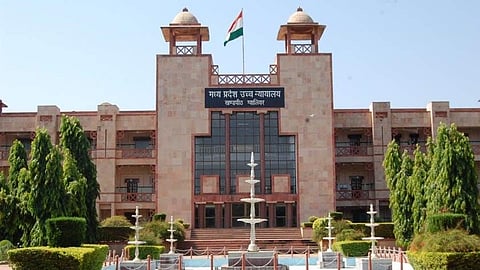

BHOPAL: The Madhya Pradesh High Court has directed Ashok Nagar district collector to probe cases where lands belonging to tribals are being grabbed or disposed of by influential individuals.
“Ashok Nagar district collector shall conduct an inquiry into the instances or cases of last ten years, where lands belonging to members of ST community are being grabbed or disposed of by influential persons, including those holding different offices,” the Gwalior bench of the high court said in its Tuesday order.
“It will also be the collector’s duty to conduct inquiry in respect of bonded labourers working in such agricultural fields/households or any other place under the domination of such powerful persons. The collector shall have to ensure that no bonded labour work in his district as it is contrary to constitutional and statutory provisions. The collector should file a detailed reply within two weeks,” a bench said.
The HC order came following submissions by the counsel for the state about cases of land grab in Ashok Nagar of Gwalior-Chambal region. The counsel submitted that it was a common practice that lands of tribals are being grabbed by influential people or they are being persuaded to dispose of their land on meagre sum.
A tribal, Chotelal Adivasi, had filed a habeas corpus petition, alleging that his wife Munni Bai is under illegal confinement of some people. However, his wife informed that she was not under anyone’s illegal confinement, but living at her brother’s residence in Mungaoli area.
She also informed the court that her husband is serving Hardeep Randhawa as bonded labour, owing to which she wants protection, as she is facing threat to life. During the course of court hearing, the possibility of Randhawa actually being behind the filing of the petition by Chotelal Adivasi, came to the fore.
“That Dharampal Sharma and Gaurav Sharma tried to influence and intimidate the petitioner in the courtroom indicates that they wanted to keep the petitioner and corpus (petitioner’s wife) silent about their possibly evil designs,” the court observed.