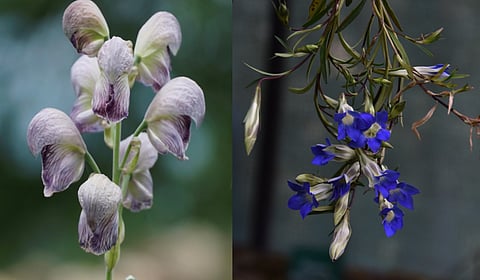

DEHRADUN: The Himalayan state of Uttarakhand – a region boasting 69 per cent forest cover and a strong national presence in wildlife conservation – has launched a unique program to revive 14 critically endangered "Red Category" plant species.
After four years of dedicated effort, the Uttarakhand Forest Department is now ready to re-establish rare plant species in their natural habitats, a unique national initiative to save endangered flora.
This biodiversity conservation program, spearheaded by the Forest Department's research branch, is being hailed as an inspirational step towards a greener future, not just for the state but for the entire country.
Speaking to TNIE, Chief Conservator of Forests (Research) Sanjiv Chaturvedi highlighted the state's rich floral diversity, saying, "Uttarakhand is a biodiversity hotspot renowned for its rich and unique floral diversity, particularly in its high-altitude ecosystems."
"The state harbors a variety of rare, endangered, and threatened (RET) plant species, many of which are endemic to the Western Himalayas and hold immense ecological, medicinal, and cultural significance. These species thrive in fragile habitats ranging from alpine meadows to Terai regions."
However, CCF Sanjiv expressed concern over the threats faced by these species, stating, "These species face severe threats from overexploitation, habitat degradation, climate change, and low regeneration, pushing many to the brink of extinction."
CCF Chaturvedi shared insights into the ambitious project. "These plants have been successfully cultivated in the Uttarakhand Forest Department's high-altitude Himalayan research centres," Chaturvedi explained.
"Concurrently, the natural habitats of these species have been scientifically mapped. With the arrival of the monsoon, these species are being replanted in their original natural locations after necessary soil improvement. The first phase of planting is expected to be completed by the end of July."
Chaturvedi further emphasised the broader impact of the initiative. "The success of this endeavour will not only be a source of pride for Uttarakhand but will also pave the way for the conservation of endangered plants in other states across the country," he asserted.
The first phase of the program targets 14 species that are either listed as endangered/critically endangered on the International Union for Conservation of Nature (IUCN) Red List or are included in the Uttarakhand State Biodiversity Board's list of endangered species.
These primarily include Trayman, Red Crane Orchid, White Himalayan Lily, Gollan Himalayan Spike, Doon Cheesewood, Kumaon Fan Palm, Jatamansi, Patwa, and Himalayan Arnebia.
According to CCF Chaturvedi, this marks the first time a conservation program has been launched for plant species mirroring the efforts typically seen for wildlife.
"Until now, such endeavours were primarily focused on animals, but plant species are equally endangered, and their conservation is the need of the hour," he stated.
He added that most of these species are of immense medicinal importance and have been over-exploited, leading to a rapid decline in their natural populations.
