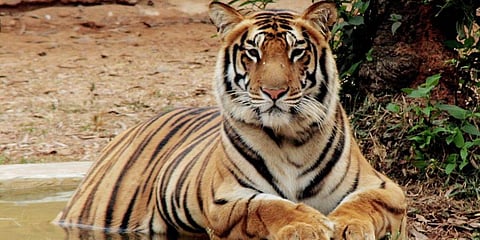

DEHRADUN: Uttarakhand, holding the impressive third position nationwide for its tiger population, has officially commenced preparations for its latest tiger assessment. This crucial exercise aims to provide an updated count of the majestic big cats in the state's diverse forests.
A regional meeting was recently convened at the Wildlife Institute of India (WII) in Dehradun, bringing together directors from the prominent Rajaji and Corbett Tiger Reserves, alongside other northern region tiger reserve heads. The initial phase of the assessment, a comprehensive 'Science Survey,' is slated to begin this October.
The state has witnessed a significant increase in its tiger numbers in recent years. The "Status of Tigers, Co-predators & Prey in India – 2022" report, released previously, indicated a robust population of 560 tigers in Uttarakhand. Preparations for the upcoming report are now well underway, with WII leading the scientific effort.
Corbett Tiger Reserve Director, Dr. Saket Badola, who participated in the recent WII meeting, stated, "During the workshop, detailed information regarding camera traps and other essential field methodologies was sought from the Forest Department. Training protocols for personnel involved in the census were also thoroughly discussed."
Elaborating on the multi-stage process, Dr. Badola further informed the TNIE, "Tiger assessment is a three-phase process. The first phase involves a 'Science Survey,' also known as ecology monitoring, which will begin in October. In this phase, forest personnel meticulously record information regarding the presence of wildlife and their habitats."
"This initial data is then submitted to WII for in-depth analysis, forming the critical second phase of the assessment," he explained. "Finally, in the third phase, camera traps are strategically installed throughout the forest, based on a scientifically derived grid from the initial science survey. The photographs captured by these traps are then compiled and returned to WII, which conducts a comprehensive study before officially releasing the final report on the tiger population."
It's noteworthy that Uttarakhand currently ranks third in India for its tiger population. Madhya Pradesh leads the nation with 785 tigers, followed closely by Karnataka with 563.