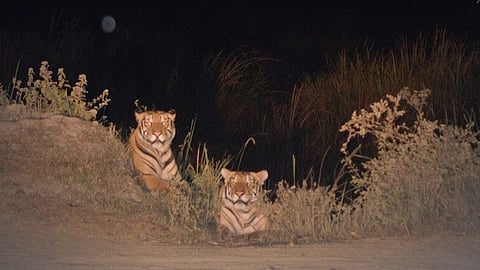

GUWAHATI: Known for its one-horned rhinos, Kaziranga National Park in Assam has also scripted a success story in tiger conservation.
According to the ‘Status of Tigers in Kaziranga, 2024’ report released by authorities on the International Tiger Day on July 29, Kaziranga has the world’s third-highest density of tigers – 18 per 100 sq km.
During a 103-day camera trapping survey, 13,157 trap nights yielded 4,011 tiger images in 242 locations. The right-flank stripe patterns were used to identify 148 adult tigers–83 females, 55 males and 10 individuals with undetermined gender–in the park’s three divisions.
The growth is particularly notable due to the first-time sampling of the Biswanath Wildlife Division, where 27 newly-recorded tigers contributed to the overall increase. In the core Eastern Assam Wildlife Division, the population grew from 104 in 2022 to 115 in 2024. The Nagaon Wildlife Division maintained a stable count of six tigers.
Chief Minister Himanta Biswa Sarma said Assam was not just protecting tigers, it was reclaiming their kingdom.
“With the world’s third-highest tiger density, expanded reserves and bold action against encroachment, the striped beasts of Assam continue to roam with power and pride,” he said.
The state’s forest minister Chandra Mohan Patowary said through strict anti-poaching measures, habitat restoration, and involvement of local stakeholders, Assam ensured the tiger’s roar continued to echo through its wild landscapes.
A UNESCO World Heritage Site, Kaziranga remains one of India’s most crucial strongholds for the Royal Bengal tigers. Its diverse ecosystems, including eastern wet alluvial grasslands, semi-evergreen forests, tropical moist mixed deciduous forests, and wetlands, provide an ideal habitat for tiger and megaherbivores.
The park authorities said the conservation status of tigers had been strengthened through rigorous protection measures, including anti-poaching efforts, habitat restoration and community-based conservation initiatives.
“These measures, spearheaded by the National Tiger Conservation Authority and the state forest department, contributed significantly to maintaining a stable and thriving tiger population. The park’s dynamic landscape, shaped by the river Brahmaputra and the Karbi-Anglong hills, supports a rich prey base, which is vital for sustaining its apex predators,” the report said.
Despite these successes, Kaziranga’s tiger population faces persistent challenges, including habitat fragmentation, human-wildlife conflict, and pressures of agricultural expansion and infrastructure development around the tiger reserve.
“The impacts of climate change further complicate conservation efforts, necessitating adaptive management strategies to ensure long-term population viability,” the report said.
“Kaziranga National Park stands as a testament to India’s leadership in tiger conservation, reinforcing the importance of sustained ecological protection, scientific research, and collaborative efforts to safeguard the future of these iconic species,” it added.