
NEW DELHI: The enormous achievement by India in covering over 94 crore people under social protection benefits garnered much appreciation during the International Labour Organisation (ILO) meeting in Geneva on Wednesday. The organisation officially acknowledged the country’s achievement and published it on its dashboard.
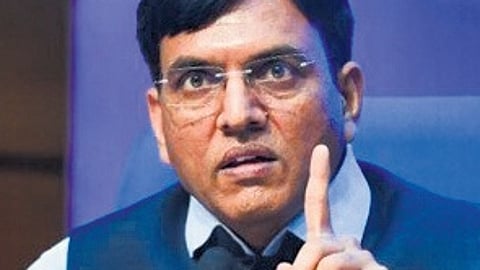
Labour and Employment Minister Mansukh Mandaviya is leading an Indian delegation to Geneva from June 10-12 to participate in the 113th session of the International Labour Conference (ILC) of the ILO.
“A total of 64.3% of India’s population, which represents over 94 crore people, are now covered under at least one social protection benefit. In 2015, this figure was just 19%. In terms of beneficiary count, India now ranks second in the world, providing social protection to around 94 crore citizens,” an official release said.
The Director-General of the ILO praised India’s focused welfare policies for the poor and labour class under PM Modi’s leadership, the release said.
“It is important to note that the present figure reflects only Phase I of the data pooling exercise. This phase focused on beneficiary data of Central and women-centric schemes in selected 8 States. With Phase II and further consolidation underway, it is expected that India’s total social protection coverage will soon surpass the 100-crore mark upon verification of additional schemes by the ILO,” the release added.
India is also the first country globally to update its 2025 social protection coverage data in the ‘ILOSTAT’ database, reinforcing its leadership in digital governance in welfare systems.
In his address, Mandiya said, “India’s unemployment rate declined from 6% in 2017 to 3.2% by 2024 with over 7.5 crore jobs created in the formal sector in the last seven years.”
The National Career Service portal is being leveraged to aggregate global job demands and facilitate international labour mobility, he said. Over 300 million unorganised workers registered on e-Shram portal, paving the way for benefits and social protection coverage.”
India recommends a graded, risk-tiered strategy that balances worker safety with operational realities, he said. “India urges to take into account and accommodate diversities across countries when setting global standards,” he added.
Risk-tiered strategy
India recommends a graded, risk-tiered strategy that balances worker safety with operational realities, Mansukh Mandaviya said. “India urges to take into account and accommodate diversities across countries when setting global standards,” he added.
