
NEW DELHI: India and Bahrain on Monday reiterated their commitment to strengthening defence and security cooperation while advancing negotiations on major trade and investment agreements, marking a step forward in deepening their strategic partnership.
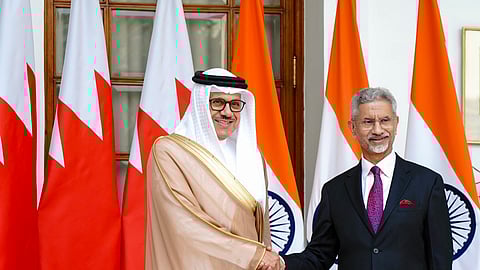
The decisions were announced after External Affairs Minister S. Jaishankar held extensive talks with visiting Bahraini Foreign Minister Dr. Abdullatif bin Rashid Alzayani in New Delhi during the fifth India–Bahrain High Joint Commission (HJC) meeting.
In a joint statement, both sides expressed optimism about expanding defence and security collaboration and cited the visit of three Indian naval ships to Bahrain in September 2025 as a sign of growing maritime cooperation. The two countries unequivocally condemned terrorism in all its forms, including the April 22 Pahalgam terror attack, and reaffirmed their resolve to combat cross-border terrorism through enhanced intelligence sharing, cybersecurity cooperation, and capacity-building.
On the economic front, the two nations announced the start of negotiations for a Comprehensive Economic Partnership Agreement (CEPA) and moved closer to finalising a bilateral investment treaty, which officials said would open new avenues for trade and capital flows.
Both sides also agreed to begin talks on a Double Taxation Avoidance Agreement (DTAA) to eliminate tax overlaps, ensure fiscal transparency, and encourage business expansion.
Reiterating India’s invitation to Bahraini investors, Jaishankar said, “The conclusion of a bilateral investment treaty and CEPA will further boost our economic ties. We welcome Bahraini investors to explore the opportunities offered by India’s expanding economy.”
Bilateral trade between India and Bahrain reached USD 1.64 billion in 2024–25, with both sides seeking to diversify cooperation across sectors such as electronics, petroleum, processed foods, base metals, and gems and jewellery. India remains one of Bahrain’s top five trading partners, and about 332,000 Indian nationals—nearly a quarter of Bahrain’s population—live and work in the Gulf kingdom.
The talks also explored emerging areas of collaboration in space, fintech, health, culture, and technology, which Jaishankar described as “new areas of promise” in an evolving partnership rooted in “centuries-old trade and people-to-people ties.”
Both ministers reaffirmed their commitment to regional peace, with Jaishankar reiterating India’s support for the Gaza Peace Plan and calling for a durable solution to the conflict in West Asia.
“India and Bahrain share a common vision for peace, stability, and prosperity in our region,” Jaishankar said, emphasising that growing cooperation between the two nations reflects a relationship built on trust, mutual respect, and shared strategic interests.