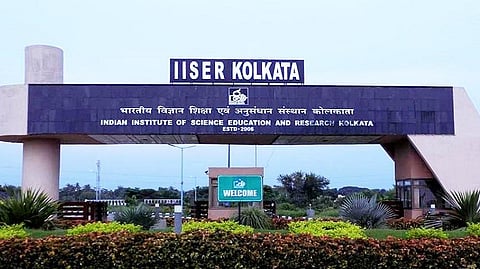

KOLKATA: A team from the Indian Institute of Science Education and Research (IISER) Kolkata has developed a strain of "friendly bacteria" that can safely and effectively fight cancer from within the patient’s body, the premier institute said in a statement.
Simultaneously, the team is also developing a detection system capable of monitoring the progress of the therapy in real time.
Together, these innovations represent a significant advancement in the integrated therapeutic and diagnostic approach, or theranostics, to cancer treatment, according to IISER Kolkata.
Their project, titled ReSET (Reprogramming the Suppressive Environment of Tumour Microenvironment), aims to address one of the key challenges in cancer therapy.
“Cancer often hides behind special immune cells called T regulatory cells (Tregs), which suppress the body’s natural defence system. This makes standard therapies like immunotherapy or chemotherapy less effective,” the statement explained.
Taking a bold and innovative approach, the IISER Kolkata team is engineering probiotics, beneficial microbes, to detect tumours and disrupt their suppressive activity, thereby reactivating the immune system to fight the disease.
In simple terms, the team is transforming friendly microbes into living, targeted medicines that could one day operate from inside the body, making cancer treatment safer and more effective.
To ensure the project is not just scientifically sound but also ethically and socially relevant, the students have engaged with oncologists, surgeons, cancer survivors, and NGOs. They have also organised school outreach programmes, cancer awareness campaigns, and collaborated with hair donors and patient support groups.
These interactions have helped them align their innovation with real-world needs, ensuring that the therapy is designed with a human-centred approach.
The team emphasises that their work is not merely a laboratory prototype, but also a proof of concept that demonstrates the potential of India’s youth to lead global scientific innovation.
“By targeting the Tregs pathway with engineered bacteria, we hope to bring forward a completely new class of cancer therapeutics, one that could revolutionise the way we treat cancer,” the team said.
The 11-member undergraduate team will represent IISER Kolkata and India at the International Genetically Engineered Machine (iGEM) Grand Jamboree 2025, the world’s largest synthetic biology competition, to be held in Paris this October.