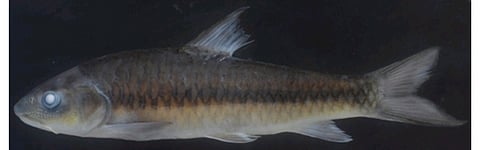

GUWAHATI: In a remarkable breakthrough for aquaculture and biodiversity conservation in the Northeast, a team of fishery scientists at Manipur University has successfully bred a Mahseer (Neolissochilus stracheyi), becoming the first in the region to achieve this feat.
The breeding took place at the university’s newly inaugurated Mahseer Hatchery.
Dr Rameshori Yumnam, team leader at the Freshwater Ichthyology and Sustainable Aquaculture Laboratory, Department of Zoology, Manipur University, described the achievement as a major step forward in conserving this ecologically significant and culturally iconic fish species, often called the “Tiger of Indian Rivers.”
The Mahseer is not only a symbol of pristine freshwater ecosystems but is also endangered due to overfishing, habitat loss, and pollution. One of the Mahseer species, Tor putitora (Golden Mahseer), has been listed as endangered by the International Union for Conservation of Nature (IUCN).
“This achievement opens new possibilities for species conservation, eco-tourism and sustainable aquaculture in Manipur,” said Dr Yumnam.
She added that given Mahseer’s popularity as a sport fish, the success also lays the foundation for developing Mahseer sanctuaries and eco-tourism ventures, which could positively impact local livelihoods and contribute to revenue generation for the state.
The Mahseer Hatchery and ongoing research efforts are part of a broader vision to protect the Northeast’s rich aquatic biodiversity while promoting sustainable development through science, innovation, and community engagement.
“Breeding of Neolissochilus species in Northeast India is essential for conserving native hill stream fish biodiversity, restoring declining wild populations, and promoting sustainable aquaculture in the region. These species are facing threats from habitat degradation, overexploitation, and climate change,” Dr Yumnam said.
According to her, successful captive breeding can ensure ex-situ conservation, provide quality seed for river ranching and stock enhancement, and reduce pressure on natural populations.
Moreover, she added, their inclusion in hill aquaculture systems can diversify livelihood opportunities for local and tribal communities while maintaining ecological balance and supporting the long-term resilience of aquatic ecosystems in the hill streams.
Dr Yumnam said the idea of breeding Neolissochilus emerged from her ongoing research on fish diversity in the Northeast and adjoining regions over the past 15 years, particularly focusing on the inventory and conservation of native hill stream fishes.
“During field surveys and documentation, I observed a noticeable decline in the natural populations of many species, including Neolissochilus species, mainly due to habitat degradation, overexploitation, and changing environmental conditions,” the researcher said.
She further stated that recognising their ecological significance, high market value, potential for aquaculture diversification, and eco-tourism, the concept of developing captive breeding protocols emerged as a practical approach to ensure both conservation and sustainable utilisation.
“The initiative thus evolved from scientific observation and conservation-driven research aimed at restoring native fish stocks, maintaining biodiversity, and creating livelihood opportunities for local hill communities through sustainable aquaculture practices,” she added.
The project, supported and encouraged by Manipur University Vice-Chancellor Prof N Lokendra Singh, was implemented in collaboration with Dr M S Akhtar of the ICAR-Central Institute of Coldwater Fisheries Research (CICFR), Bhimtal, Uttarakhand, and Somirin Varam, a young professional working under the Mahseer Project.
