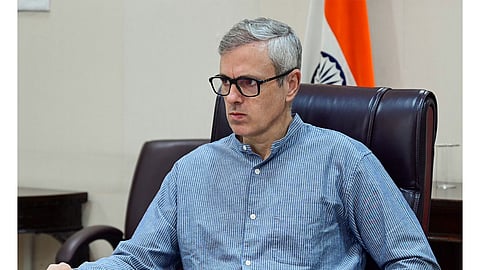

SRINAGAR: In a major policy decision, Chief Minister Omar Abdullah has announced the revival of the half-yearly Darbar Move practice — the biannual shifting of the capital and seat of governance between Jammu and Srinagar.
The 147-year-old tradition, which was halted by Lieutenant Governor Manoj Sinha in 2021, is being reinstated following cabinet approval.
“The cabinet has given the nod for revival of Durbar Move,” CM Omar told reporters in Jammu today. He said the file in this regard was sent to Lieutenant Governor Manoj Sinha, who has approved it.
The cabinet had recommended restoration of the Darbar Move in September this year.
The practice was started in 1872 by the then J&K Maharaja, Gulab Singh, to alternate the capital between Jammu during winter and Srinagar in summer. The move was aimed at maintaining administrative accessibility and ensuring governance across both regions.
The revival of the Darbar Move had been a key promise in the National Conference’s election manifesto. Traders from both Jammu and Kashmir had also demanded its restoration, citing its economic and social benefits.
The previous administration under the Lieutenant Governor had halted the Darbar Move in 2021, citing cost-cutting measures and claiming it would save around ₹200 crore annually.
However, proponents argue that the Darbar Move helps the J&K government maintain its presence in both capitals, ensuring governance remains responsive to the needs of people in both regions.
According to traders, the Darbar Move has historically strengthened communal harmony and connections between Kashmir and Jammu.
“When the Darbar used to shift to Jammu in winter, thousands of Kashmir-based employees and their families would come to Jammu,” said a Jammu trader. “We are hopeful that hustle and bustle will return to Jammu markets after the resumption of the Darbar Move,” he added.
Over 10,000 government employees, along with thousands of official files and equipment, used to be transported in trucks and buses twice a year as part of the Darbar Move. The Civil Secretariat and government offices would shift from Srinagar to Jammu in winter and return to the summer capital after six months.
From May to October, government offices functioned from Srinagar, while the winter capital Jammu served as the seat of administration for the other half of the year.
