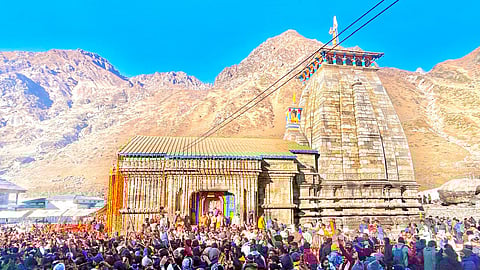

DEHRADUN: Uttarakhand's revered Char Dham Yatra, which commenced on April 30, 2025, is grappling with one of its most challenging seasons in recent memory. An analysis by the Dehradun-based Social Development for Communities (SDC) Foundation reveals severe disruptions, with the first four months marking a significant downturn in pilgrim footfall.
As of August 31, the Yatra has witnessed a staggering 55 "Zero-Pilgrim days" – instances where not a single devotee could reach the sacred shrines.
Additionally, there were 89 days where footfall across the Dhams remained critically low, between one and 1,000 pilgrims.
Anoop Nautiyal, founder of SDC, highlighted the disproportionate impact on certain shrines. "Among the four shrines, Yamunotri has been the worst affected, with 23 Zero-Pilgrim days and 30 days with one to 1,000 visitors. Gangotri faced 27 Zero-Pilgrim days," he told TNIE.
In contrast, Hemkund Sahib and Badrinath recorded only 3 and 2 Zero-Pilgrim days, respectively, though they too experienced low turnout on multiple occasions.
Nautiyal asserted that these repeated disruptions, primarily due to extreme weather, landslides, and other disasters, have "severely impacted the Yatra, breaking the backbone of Uttarakhand’s pilgrimage-driven economy."
With lakhs of local livelihoods dependent on this annual pilgrimage, the situation demands urgent government intervention.
"The Char Dham Yatra is one of the key economic lifelines of our hill economy," Nautiyal stated. "The frequency of weather and rain-related disasters this year clearly shows that the state needs to shift its focus from record-setting pilgrim numbers to building resilience and sustainability in pilgrimage infrastructure."
He stressed the critical need for investment in climate-resilient roads, improved drainage, real-time weather monitoring, and robust communication networks.
Furthermore, a comprehensive economic relief package for affected businesses, transporters, and service providers is essential to avert bankruptcies and mitigate societal upheaval.
The outlook remains uncertain, with the Yatra already suspended for five days in early September and crucial road access to Yamunotri and Gangotri severely damaged.
"Making the Yatra climate and disaster proof, and not merely a numbers-driven exercise, must become the guiding principle," Nautiyal concluded, urging for planning focused on resilience over record-breaking figures.