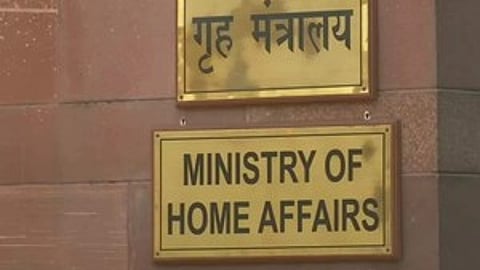

NEW DELHI: The Union Ministry of Home Affairs (MHA) has extended the cut-off date for entry under the Citizenship (Amendment) Act (CAA) to 31 December 2024, allowing members of persecuted minority communities from Afghanistan, Bangladesh and Pakistan, including Hindus, Sikhs, Buddhists, Jains, Parsis and Christians, to stay in India even without valid travel documents.
Originally, under the Citizenship (Amendment) Act (CAA), which came into force last year, members of these persecuted minorities who came to India on or before 31 December 2014 were granted Indian citizenship.
However, the latest order, issued under the just-implemented Immigration and Foreigners Act, 2025, has come as a major relief to a large number of people, especially Hindus from Pakistan, who crossed over to India after 2014 and whose fate was hanging in the balance.
Officials said that since cross-border migration of persecuted minorities has continued, the cut-off has now been extended by a decade.
The MHA in its new order stated, “A person belonging to a minority community in Afghanistan, Bangladesh and Pakistan, Hindus, Sikhs, Buddhists, Jains, Parsis and Christians, who were compelled to seek shelter in India due to religious persecution or fear of religious persecution and entered the country on or before 31 December 2024 without valid documents, including a passport or other travel documents, or with valid documents, including a passport or other travel documents, and the validity of such documents have expired, will be exempted from the rule of possessing a valid passport and visa.”
The Citizenship (Amendment) Act was passed by Parliament in December 2019 and signed into law by then President Ram Nath Kovind. The Act aims to fast-track Indian citizenship for undocumented non-Muslim migrants fleeing religious persecution in Bangladesh, Pakistan and Afghanistan.
The Central government formally implemented the law on 11 March last year by notifying the necessary rules, nearly four years after its passage.
The latest extension follows longstanding appeals from refugee associations, including a body representing displaced persons from Bangladesh, which had urged Prime Minister Narendra Modi to revise the cut-off to reflect the ongoing influx of minority refugees.
