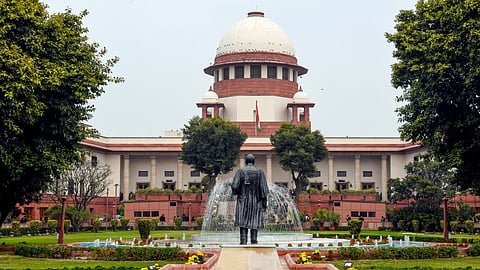

NEW DELHI: The Supreme Court on Wednesday said that it has the powers to strike down religious practices or superstitions—even if they are rooted in faith—if they violate public order, health and morality.
A nine-judge Constitutional bench headed by Chief Justice Surya Kant, hearing a batch of review pleas challenging the Sabarimala judgment, rejected the Centre’s submission that a secular court can’t decide on superstitions.
Solicitor General Tushar Mehta said that even if a practice is superstitious, it is not for the court to determine that. “Under Article 25(2)(b) of the Constitution, it is for the legislature to step in and enact a reform law,” he said, while stressing that ‘constitutional morality’ cannot be a ground for judicial review to decide essential religious practices and beliefs.
The bench categorically clarified that it doesn’t agree with the line that the legislature has the ‘last word’ in such matters, stressing that courts cannot shy away from testing contentious practices against constitutional principles.
The bench also questioned how persons who are not devotees of Lord Ayyappa could challenge a centuries-old temple custom in the top court. The Supreme Court had in 2018 struck down the restriction on the entry of women in the age group of 10-50 years to the Sabarimala Ayyappa temple, based on a public interest litigation filed by an organisation named Indian Young Lawyers Association.
Mehta, appearing for the Centre, said two previous Supreme Court verdicts on decriminalisation of consensual gay sex and adultery provisions based on the doctrine of constitutional morality were “not a good law”.
