
RAIPUR: The special session of the Chhattisgarh Legislative Assembly on Thursday witnessed intense political sparring between the ruling BJP and the opposition Congress over the women’s reservation issue.
While both sides expressed support for the 33% women’s reservation resolution, the debate exposed sharp differences over its implementation timeline and the prerequisite of delimitation.
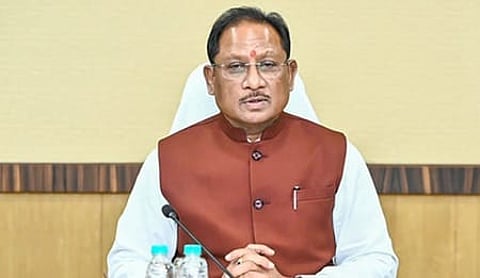
Chief Minister Vishnu Deo Sai moved a formal resolution seeking endorsement of 33% reservation for women in Parliament and State Assemblies. Leading the debate for the BJP, former minister Lata Usendi presented a historical critique of the Congress, arguing that women’s representation has grown only marginally since 1952, when there were 22 women MPs, to 74 at present.
Usendi attributed the stagnation to the “freezing of delimitation” in 1971 during the Indira Gandhi government, which she said limited the expansion of seats. She said the BJP government had gone beyond “tokenism” by ensuring dignity and financial independence for women, and highlighted Chhattisgarh’s 50% reservation for women in local bodies as a landmark step toward “Nari Shakti”.
BJP state president and MLA Kiran Deo questioned the Opposition’s stance, asking why it supported reservations at the panchayat level but hesitated to extend the same to Parliament and Assemblies.
The Congress, led by former minister Anila Bhendia, mounted a strong counter, backing the quota but calling the current Bill a “Chunavi Jhunjhuna” (electoral gimmick).
The Opposition’s main objection centred on the delimitation clause, under which the 33% reservation would come into effect only after the next census and subsequent redrawing of constituencies. Bhendia questioned why the government could not implement the quota immediately in the existing structure if it was sincere about women’s empowerment.
Congress leaders also accused the BJP of using the special session for political gain ahead of future elections, calling the delay-linked implementation a “betrayal of public trust”.
The debate saw participation from several senior leaders of both parties amid heated exchanges over the intent and timing of the reservation push.
