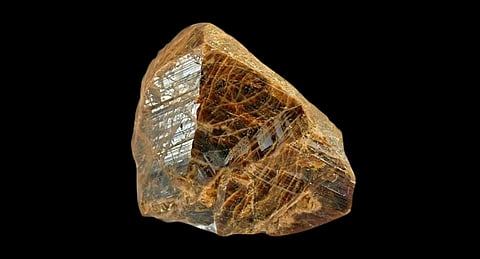

The Union Budget speech has proposed to support the mineral-rich states of Odisha, Kerala, Andhra Pradesh and Tamil Nadu to establish rare earth corridors and promote mining, processing, research and manufacturing. Prior to this, the Indian government seemed to be signalling a willingness to engage private players in exploring India's vast beach sands and monazite resources. If implemented, this is a welcome step for India’s critical mineral security, as it unlocks the potential of monazite’s constituent light rare-earth oxides (REO) for private-sector investment.
Monazite, present in India's beach sands, is currently a prescribed material under India's Atomic Energy Act, 1962, because of its around 10% thorium and trace uranium content. This designation restricts it to the monopoly of Indian Rare Earth Limited (IREL).
However, limiting private participation to just the exploration process, leaving mining untouched, is unlikely to spur any meaningful activity. Exploration is typically incentivised by the preferential right to mine. Without that, the upfront capital risk required and the long exploration timelines contingent upon which exploration firms earn their revenues, are sure to deter prospects.
Additionally, junior explorers -- smaller firms with niche technological capabilities -- in other jurisdictions are allowed to sell their discoveries to larger operators at competitive market rates. This is a less lucrative option when there exist state mining monopolies.
Hence, for reform to truly take shape, India must pair exploration liberalisation with a regulatory overhaul that treats monazite as a dual-use ore and allows beach sand mineral (BSM) mining by private players under a tightly enforced licensing regime.
The numbers speak for themselves. India's beach and inland placer deposits of monazite across eight states are capable of yielding 7.23 Mt (million tonnes) of REO (Rare Earth Oxides) dwarfing the 1.29 Mt in-situ REO in the hard rock deposits of Gujarat and Rajasthan. At higher REO concentrations of 55-60%, monazite offers an enormous grade advantage over alternative ores.
Additionally, beach sand is a mechanically concentrated ore wherein wave currents wash away light quartz sand, leaving behind heavy minerals ripe for extraction. This makes mining of beach-based monazite an extremely cost-effective process involving dredging and simple gravity/magnetic separation, as compared to conventional drilling, blasting, and chemical processing in land-based ores, which require higher power.
Evidently, it is the thorium content and, consequently, monazite's radioactive nature that stand in the way. India holds around 25% of the world’s thorium reserves and has only low-grade, small uranium reserves, making thorium key to India’s nuclear programme. Still, these are experimental and not commercial-grade projects. With no spot market and much thorium tied up in R&D or strategic stockpiles, its national security halo must not block PPP models that ensure government access to thorium while the private sector leads beach sand mining.
Monazite's radioactivity categorises it as a naturally occurring radioactive material (NORM) by the International Atomic Energy Agency, in that it is treated as a regulated substance, not industrial-grade material. Hence, by international standards, it is also not subject to the high controls applicable to nuclear fuel. Proven and mature physical safeguards during its mining, separation, transportation, and storage would effectively mitigate its radioactivity risk.
None of this is news for India, and in fact, critics of allowing BSM to be mined by private players reference the period between 1998 and 2019, when this was allowed.
In 1998, private BSM mining was allowed under a licensing regime (except monazite) to maximize domestic/foreign participation. In 2016, following the 2015 amendment to the Mines and Minerals Development and Regulation Act, the Atomic Mineral Concession Rules (AMCR) brought all BSMs onto the atomic minerals list. A threshold of 0.75% monazite was introduced, with only government-controlled firms allowed to work in the BSM deposits above that level. This was reversed in 2019, when the AMCR was amended to set a 0.00% threshold, effectively barring private-sector mining of any beach sand deposit containing monazite of any grade.
This reversal was triggered by illegal mining in several pockets of the country, particularly Tamil Nadu. This included mining without valid clearances and beyond permitted sites, or in violation of coastal zone related compliance - an important concern given these are ecologically fragile ecosystems. However, the bigger issue was the leakage of monazite which arose from a fundamental flaw in the policy.
Miners had to store separated monazite in DAE-approved concrete-lined pits, submit quarterly accounts and allow inspections. Since monazite was banned for commercial activity, including to the state, and was still valuable for its thorium and REO content, a black market for it emerged, with some exported illegally, misdeclared as zircon or ilmenite, or just stockpiled in private godowns without safeguards. This sparked national security concerns, and instead of tightening regulations or considering policy changes, the government chose a blanket ban on private sector involvement.
One way this could be solved is by the IREL rolling out an offtake policy for monazite at a price floor above its market price. Post-cracking monazite and separating thorium, the processing of the residual REO could involve licensed private players, including foreign companies from Japan and South Korea, partnerships that IREL is currently exploring. This guaranteed procurement policy for monazite could potentially incentivise its compliant storage while allowing commercial activity and value addition in other BSMs to take off. This would also help IREL with the feedstock required to expand REO production.
This model, in which IREL continues to be embedded in the monazite value chain while being supported with market incentives, will help curb the mineral’s leakage. This bodes well for the radioactive concerns associated with these substances as well. The capex costs required for monazite processing, thorium handling, and radioactive waste management, along with the economies of scale and environmental scrutiny therein, may still work best under government control. The costs incurred in the monazite procurement should not be seen as a liability, but an asset which can help India gain foreign policy leverage by becoming a key node in the global mineral supply chain to counter Chinese dominance.
India must explore such models within a tight licensing regime to combat the rampant cronyism and corruption seen in the pre-2019 era. A phased approach of transitioning away from the complete ban on private sector activity should be adopted, starting with pilot zones with strict oversight, short-term permits, and clear exit clauses, considering existing concerns. These deliberations are essential to the Indian national interest. The current ban may be convenient, but it is a blunt instrument that stifles progress, throwing the metaphorical baby along with the bathtub.
(The author is a researcher in technology geopolitics at the Takshashila Institution, Bangalore. Views are personal.)
