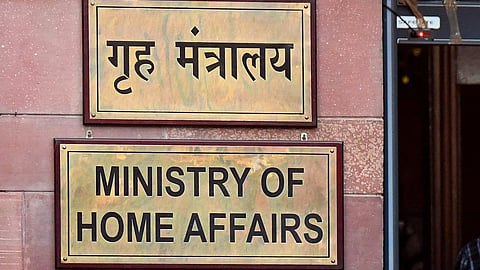

SRINAGAR: The Ministry of Home Affairs (MHA) has proposed the creation of Territorial Council for Ladakh with the Chief Executive Councillor (CEC) of the Hill Council serving as the Chief Minister of the Union Territory.
The proposal, however, was rejected by Ladakhi leaders, who reiterated their long-standing demand for statehood and grant of the Sixth Schedule for the region.
The proposal was floated by MHA during the meeting of the High-Powered Committee (HPC) on Ladakh, chaired by Union MoS Home Nityanand Rai held in New Delhi on February 4.
The HPC comprised MHA officials, Ladakh MPs, Lieutenant Governor of Ladakh, CEC of Leh and Kargil Hill Development Councils, and leaders of Leh Apex Body (LAB) and Kargil Democratic Alliance (KDA). LAB and KDA are amalgams of political, social, trade, and religious groups from Leh and Kargil districts spearheading joint agitation for Sixth Schedule and statehood.
LAB co-chairman Chering Dorjay told TNIE that during the meeting, MHA floated the idea of establishing a Territorial Council for Ladakh.
Under the proposal, the CEC of the Ladakh Autonomous Hill Council would function as Chief Minister, while the Deputy CEC would assume the role of Deputy Chief Minister.
The LAB co-chairman said both KDA and LAB rejected the MHA’s proposal outright on the spot.
“We told them we are not ready to discuss it and we reject it,” he said, adding that both LAB and KDA leaders reiterated their demand for grant of Sixth Schedule status and full-fledged statehood with a legislature for Ladakh.
The MHA also raised questions about the financial viability of granting statehood and the Sixth Schedule to Ladakh.
“They were trying to tell us that both Sixth Schedule and statehood were not feasible for the region,” Dorjay said.
According to him, the Centre had earlier proposed extending safeguards under Article 371.
“We told them there is no concept of Article 371 in a Union Territory and without statehood. We asked what would happen to a legislature under such an arrangement, but they did not give any specific answer”.
On the issue of economic sustainability, Dorjay said the MHA questioned the availability of resources if Ladakh was granted state status. “They asked where we would get resources. We told them Ladakh qualifies for a special category status. When we were part of the erstwhile Jammu and Kashmir state, it was a special category state. Why can that status not be extended to Ladakh?”
“In several Northeastern states, the Centre provides substantial financial support for salaries and pensions of the employees,” he said.
Dorjay also refuted the MHA’s contention that the Sixth Schedule cannot be applied to an entire population, citing the example of Meghalaya, “where it operates across entire states and where all districts have autonomous councils”.
Sources said the MHA may invite Ladakh leaders for another round of talks within a month.
“We have told them that if they are sincere about dialogue, they should call us again within a month,” Dorjay said, asserting that there would be no compromise on the demand for Sixth Schedule and statehood (with legislature) for Ladakh.