
NEW DELHI: The Indian Air Force, which achieved air superiority during Operation Sindoor, has remained in focus amid renewed discussions on air power, force modernisation and future capability requirements.
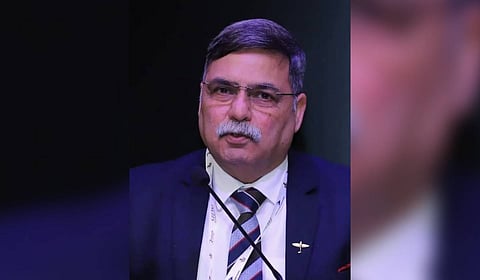
Air Vice Marshal Anil Golani (Retd), who raised and commanded the Indian Air Force’s first Harpy squadron and retired as Chief Staff Officer (Air Vector) at the Strategic Forces Command and now serves as Director General of the Centre for Aerospace Power and Strategy Studies (CAPSS), spoke to The New Indian Express on a wide-ranging set of issues, including lessons from the recent conflict, fighter acquisitions, indigenous capability development and India’s push for aero-engine self-reliance
What are the lessons for the IAF from Operation Sindoor?
Operation Sindoor, along with other recent conflicts such as Operation Midnight Hammer and Operation Rising Lion, has reinforced the centrality of air power in contemporary warfare. Beyond-visual-range (BVR) engagements and non-contact operations are increasingly emerging as decisive factors. There is a need for sustained investment in electronic warfare and intelligence, surveillance and reconnaissance (ISR) capabilities to maintain operational control.
Do you think the current defence budget allocation is justified? The aim is to reach around 2.5% of GDP, while it currently stands closer to 2%.
The defence budget has seen a significant increase of around 15% and at present remains in the range of roughly 1.9% to 2% of GDP. Moving towards 2.5% is a reasonable objective but such an increase needs to be gradual. The pace of budgetary expansion has to be matched with the capacity of the Indian defence industry to absorb and utilise the allocation effectively. Sustained and predictable increases, rather than sharp spikes, are necessary to ensure procurement pipelines, production capacities and capability development progress in a calibrated and balanced manner.
Pakistan is reportedly set to induct the Chinese fifth-generation J-35 soon. Do you think India needs to import a fifth-generation fighter as a stop-gap to deal with a two-front challenge?
I do not believe India necessarily needs to import a fifth-generation platform as a stop-gap measure, particularly since development of the AMCA is already underway. In contemporary warfare, the platform alone is no longer the decisive factor. What matters increasingly is the range and effectiveness of weapons delivery, along with networked operations. The traditional linear kill chain has evolved into a broader “kill web”, where sensors, shooters and data networks operate in an integrated manner. In that framework, capability is determined less by the platform itself and more by how effectively it is integrated into the overall combat network.
How important is the acquisition of 114 Rafale aircraft cleared by the defence ministry? How will it help the IAF and is it necessary?
The acquisition needs to be viewed in the context of the IAF’s current force levels and the phased retirement of legacy platforms over the coming years. The IAF’s fighter squadron strength is currently around 29 against a sanctioned strength of 42.5, making the induction of MRFA necessary to sustain operational capability. Inducting more Rafales also offers operational and logistical advantages, as the IAF already operates the platform, ensuring commonality in training, maintenance and weapons systems while reducing lifecycle costs. It provides a relatively quick capability enhancement even as indigenous programmes continue to mature. By the time additional aircraft are inducted, the platform is expected to be in the more advanced F5 configuration, compared to the F3 variant currently in service, representing a significant enhancement in overall capability.
There is an ongoing debate on Rafale acquisitions curbing ‘Aatmanirbharta’ and indigenisation. What would you comment on that?
This debate often presents a false binary between imports and indigenisation. Indigenous programmes such as Tejas and AMCA remain central to long-term self-reliance, but they operate on longer development timelines. In the interim, acquisitions like Rafale help sustain operational capability while domestic programmes mature. The key issue is how such acquisitions are structured, in this case, around 96 of the 114 aircraft are expected to be manufactured in India with an estimated 50-60 per cent indigenous content, alongside greater localisation and industrial participation. Furthermore, access to source codes for integrating indigenous weapons such as the Astra BVR missile and BrahMos-NG is also likely, which would provide greater operational flexibility and support the growth of the indigenous weapons and aerospace ecosystem rather than undermine indigenisation efforts.
The IAF is reportedly expected to receive 88 single-seat fighters and 26 twin-seat trainers. Isn’t the number of trainers relatively high? If yes, why so?
The numbers need to be seen in the context of fleet expansion. The IAF already operates 2 Rafale squadrons with 36 aircraft and with the addition of 114 more, the fleet is likely to expand to around 8 squadrons. Typically, each squadron maintains about 3 to 4 twin-seat aircraft for training, conversion and operational roles, which explains the proportion of trainers. It is also important to understand that twin-seat Rafales are fully combat-capable and not restricted to training alone. They have the same operational capability as single-seat fighters and can undertake combat missions, so the higher number provides both training depth and operational flexibility as the fleet size increases.
HAL has not yet begun deliveries of the Tejas Mk1A to the IAF despite an order for 180 aircraft. Where does the problem lie and what can be done?
The primary issue lies in integration and compliance with the stipulated Air Staff Qualitative Requirements (ASQRs). The initial Mk1A batches, which are to be equipped with the Israeli ELM-2052 radar, have faced integration challenges with weapons and onboard sensors, including the Astra Mk1 BVR missile. HAL must ensure that all specified SQRs are fully met before deliveries begin, as capability gaps at induction tend to create operational and maintenance challenges later.
In the case of the Tejas Mk1, the IAF accepted aircraft even though all SQRs had not been fully met, which later resulted in issues being addressed after induction. The current approach mirrors lessons learnt from that experience, with the IAF now preferring to accept aircraft only after the stipulated standards are achieved. Accordingly, HAL needs to focus on meeting the SQRs in full before proceeding with deliveries.
What needs to be done for India to achieve its goal of developing an indigenous aero-engine?
Developing an indigenous aero-engine requires clear policy direction, institutional accountability and sustained long-term investment. Parallel development of indigenous capability is essential alongside engagement with foreign OEMs, so that technology absorption and domestic capacity building take place simultaneously rather than sequentially.
Collaboration with an international partner for the proposed high-thrust engine can help bridge critical technology gaps while enabling the absorption of design and manufacturing expertise over time. Equally important is a significant and sustained increase in research and development spending, with a long-term aim of raising R&D allocation to around 5% of the defence budget so that indigenous capability can be built in a structured and sustainable manner.
