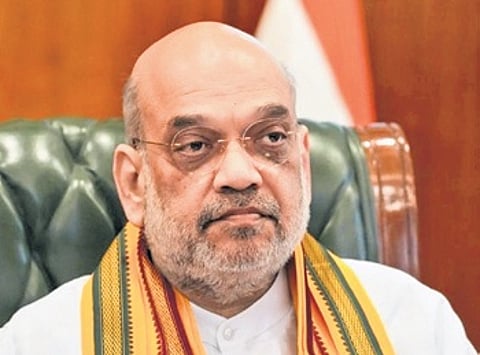

NEW DELHI: After successes to meet Union Home Minister Amit Shah’s March 31 deadline to eliminate Maoists, the government is working on a calibrated plan of phased withdrawal of central security forces from the left-wing –extremism-hit areas, officials said.
The plan envisages a gradual redeployment of select forces, with the CRPF set to anchor a redefined security grid during the transition as ITBP and BSF forces are likely to withdraw in phases starting April last, subject to ground assessments.
The officials clarified that the drawdown of forces will begin with priority districts. A detailed, area-specific roadmap is being finalised to prevent security gaps and ensure that gains made against Maoist groups are not reversed.
“The idea is stability first, withdrawal later,” a senior MHA official said, underlining that troop reductions would be incremental. Security presence will continue in sensitive pockets even as overall force levels are rationalised.
The move follows significant successes by security forces in dismantling Naxal networks and neutralising key operatives. According to government data, the LWE footprint has shrunk dramatically. The number of affected districts has fallen from 126 in 2018 to eight by December 2025, with only three categorised as “most affected”.
Incidents of violence have also declined by 88% since their peak in 2010, while civilian and security personnel fatalities have dropped by 90%. In 2025 so far, 317 Naxals have been neutralised, 862 arrested and 1,973 surrendered.
The officials said the security recalibration coincides with a broader shift toward a development-centric strategy in the remaining affected areas. Teams are expected to begin field visits to remote villages to conduct surveys, identify infrastructure deficits and prepare a structured development plan for the next financial year.
The long-term objective, they indicated, is to transition from a predominantly combat-driven approach to a model that integrates security stabilisation with rehabilitation and economic development.
Broader shift towards development strategy
The officials said the security recalibration coincides with a broader shift toward a development-centric strategy in the remaining affected areas. Teams are expected to begin field visits to remote villages to conduct surveys, identify infrastructure deficits and prepare a structured development plan.