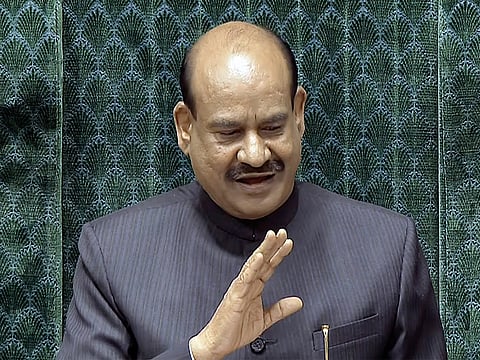

The concept of Parliamentary Friendship Groups, recently mooted by Lok Sabha Speaker Om Birla, marks a significant effort to formalise and expand India’s parliamentary diplomacy beyond traditional executive-led foreign engagement. The initiative is anchored in the belief that legislatures, as representatives of democratic will, have an important and distinct role to play in shaping international relationships, building trust between nations, and sustaining dialogue even during periods of geopolitical uncertainty.
Under this framework, the Lok Sabha has constituted Parliamentary Friendship Groups with a large number of countries across regions and continents. Each group is made up of Members of Parliament drawn from different political parties, reflecting a conscious attempt to project India’s democratic pluralism and bipartisan consensus on external engagement. By design, these groups bring together lawmakers from the treasury benches as well as the opposition, ensuring that India’s interactions with foreign legislatures are not seen as partisan or transient but as broadly representative of the national interest.
The broader objective
The primary objective of the Parliamentary Friendship Groups is to establish structured and continuous channels of engagement between Indian MPs and their counterparts abroad. Unlike ad hoc parliamentary delegations or protocol-driven visits, these groups are meant to enable sustained interaction, allowing legislators to exchange views on law-making, governance practices, institutional reforms and democratic norms. They also provide a platform for discussing wider areas of mutual interest such as trade, investment, technology cooperation, education, culture and global challenges that increasingly require legislative attention across countries.
From a diplomatic perspective, the initiative complements India’s conventional foreign policy mechanisms rather than replacing them. While the executive branch continues to lead negotiations and strategic decision-making, parliamentary friendship groups add a parallel layer of engagement that can deepen mutual understanding at a political and societal level. Legislators are often able to speak more candidly, share domestic perspectives, and build personal rapport with foreign counterparts, which can help smooth bilateral relations and create goodwill that endures beyond changes in governments.
The scope of the initiative is deliberately broad. Friendship groups have been formed with major strategic partners as well as with countries in India’s immediate neighbourhood, the Global South and emerging regions. This wide coverage signals an intent to align parliamentary outreach with India’s expanding global footprint and its aspiration to play a more active role in international affairs. By involving parliamentarians who have subject-matter expertise or long experience in foreign affairs, the groups are also expected to enrich India’s external engagement with informed legislative perspectives.
Parliamentary diplomacy
Another important dimension of the initiative is its emphasis on institutionalising parliamentary diplomacy. India has previously relied on informal exchanges, occasional delegations and conference participation by MPs to engage with foreign legislatures. The creation of formal friendship groups represents a shift towards continuity and predictability, allowing relationships to be nurtured over time rather than reset with each visit. This structure also enables follow-up on discussions, greater coordination with embassies and foreign parliaments, and the gradual building of trust.
International models
Similar models exist elsewhere, notably in the European Parliament, which operates formal inter-parliamentary delegations and friendship groups to maintain sustained ties with non-EU countries and regional blocs. These delegations engage regularly with partner legislatures, observe elections, exchange views on law-making and democratic standards, and often act as steady channels of dialogue even when relations between governments face strain. Their continuity allows the European Parliament to develop long-term institutional relationships that go beyond diplomatic protocol.
A comparable approach is seen in the United States Congress, where bipartisan congressional caucuses and friendship groups focus on specific countries or regions such as India, Japan or Africa. While informal in structure, these caucuses play an influential role by shaping legislative opinion, facilitating visits and exchanges, and reinforcing strategic partnerships through sustained lawmaker-to-lawmaker engagement, demonstrating how parliamentary diplomacy can complement and sometimes outlast executive-level initiatives.
In essence, the Parliamentary Friendship Groups initiative reflects a recognition that in an increasingly interconnected and complex world, diplomacy cannot remain the exclusive domain of the executive. By empowering legislators to engage systematically with their global peers, the Lok Sabha leadership is seeking to project India’s democratic ethos, strengthen bilateral and multilateral ties, and give parliamentary voices a more prominent role in shaping the country’s international engagement.