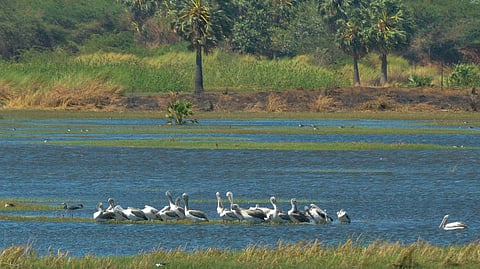

AHMEDABAD: Gujarat’s State Level Wetland Authority has existed on paper since 2017, but the government has admitted in the Assembly that not a single meeting has been held in the past two years, raising concerns over oversight of fragile wetland ecosystems.
The disclosure, made in the Gujarat Legislative Assembly, revealed that the 24-member authority, though formally constituted in 2017, has remained functionally inactive, with zero meetings during the last two years.
The admission came in response to a question by Congress MLA Anant Patel. The authority is chaired by the Forest Minister, with the Minister of State for Forest and the Chief Secretary as vice chairpersons, and 21 senior officials as members. Despite this structure, it has not convened even once in the past two years.
The authority is mandated to oversee wetland policy, conservation planning and monitoring. However, the absence of meetings indicates that no structured review of wetland mapping, conservation status, pollution threats or land-use changes has formally taken place at the highest state level during this period.
The state government recognises wetlands as hydrologically sensitive zones where seasonal or permanent water presence creates distinct soil conditions and supports specialised vegetation and aquatic biodiversity. Such ecosystems require continuous monitoring due to their vulnerability to encroachments, urban expansion, altered drainage patterns and seasonal water stress.
International frameworks such as the Ramsar Convention define wetlands broadly, covering marshes, lakes, mangroves, lagoons and shallow marine waters, highlighting the wide scope of governance required. Ecological criteria outlined by the U.S. Fish and Wildlife Service also stress the need for periodic scientific and policy review of these dynamic and transitional landscapes.
Gujarat’s wetland governance framework now stands exposed as structurally established but operationally stalled, where detailed ecological definitions exist, international conventions are acknowledged, committee hierarchies are notified yet the core decision-making platform has remained inactive, leaving a silent regulatory gap over ecosystems that cannot afford institutional silence.
