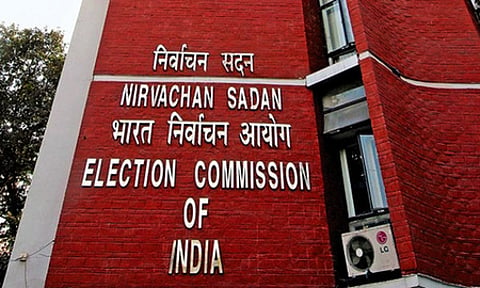

The Election Commission (EC) on Saturday began publishing post-Special Intensive Revision (SIR) electoral rolls in West Bengal in phases, with Bankura district showing around 1.18 lakh names deleted since the exercise began - a reduction of over 3% of the district’s electorate.
Hard copies of the updated rolls were put up in districts including Bankura and Cooch Behar, even as the lists were yet to be made available online on the EC’s portals and mobile application till reports last received.
In Bankura, the electorate stood at 30,33,830 when the SIR exercise commenced on November 4 last year. The draft rolls published on December 16 had already brought the number down to 29,01,009.
Following hearings and scrutiny during the subsequent phase of the SIR, around 4,000 more names were deleted. However, a few thousand new applications under Form 6, for inclusion of new voters, were approved.
As a result, the final electoral roll of Bankura, a politically significant district where BJP and TMC have near-equal influence, now stands at approximately 29,15,000, reflecting a net deletion of around 1.18 lakh names since the SIR began, according to a senior district official.
EC officials said deletions were primarily due to death, migration, duplication, and untraceability, while additions were verified before being accepted.
Reports from other districts are still awaited.
The phased publication also classifies 7.08 crore electors, whose names appeared in the draft rolls released on December 16, into three categories: 'approved', 'deleted', and 'under adjudication/under consideration'. Commission sources noted that in parts of north Kolkata, nearly 17,000 names were missing from the approved rolls, prompting reactions from rival political parties.
The SIR process, the first statewide revision since 2002, began with the distribution of enumeration forms on November 4, 2025. The commission took 116 days to provisionally complete the exercise and publish what officials described as a "final but dynamic" list, with adjudication still ongoing for several cases.
The second phase involved hearings for 1.67 crore electors, 1.36 crore flagged for logical discrepancies and 31 lakh lacking proper mapping. Around 60 lakh voters remain under adjudication, meaning their inclusion or exclusion will be determined in supplementary rolls issued in phases.
Meanwhile, long queues were seen outside district election offices and cyber cafés as anxious voters checked their names in the updated rolls. In districts such as Bankura, North 24 Parganas, and parts of Kolkata, residents scoured hard copies posted on notice boards, taking photographs and seeking help from officials.
At several district magistrate and sub-divisional offices, voters waited in serpentine queues for their turn to verify whether their names figured under the 'approved', 'deleted' or 'under adjudication' categories.
With the updated rolls yet to be fully accessible online, cyber cafes reported a sudden surge in footfall. In many neighbourhoods, small computer centres witnessed lines of people waiting outside, clutching voter ID cards and enumeration slips, reflecting both public anxiety and the high political stakes surrounding the revision exercise ahead of next year's assembly elections.
