
NEW DELHI: As India moves into 2026, its states articulate aspirations shaped by their distinct regional priorities, resources, and social contexts. Acknowledging that growth and progress cannot follow a single template, states adopt diverse approaches—some emphasising industrial expansion, others focusing on agriculture, services, tourism, or technology—while sticking to the national vision.
Across the federation, there is a shared aspiration to ease Centre–state tensions through deeper cooperative federalism. States seek smoother coordination, predictable fiscal flows, and constructive policy dialogue to clear blocks in the path of progress, whether infrastructural, financial, or administrative. Strengthening connectivity, logistics, urban infrastructure, and rural assets is seen as essential to sustaining growth.
States are also focused on meeting the expectations of their increasingly aspirational populations. Generating employment, improving education and healthcare, and ensuring social mobility—especially for youth and vulnerable communities—remain central goals.
Equally important is the commitment to social stability and harmony. States aspire to address threats from terrorism, extremism, and social divisions through firm governance and inclusive policies.
SIR furore
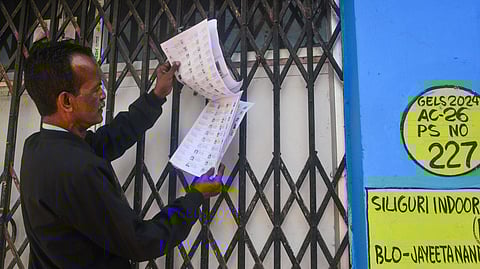
As the 2026 Assembly elections near, West Bengal’s politics is hardening into a sharp communal binary, with the ruling Trinamool Congress and Opposition BJP locked in an increasingly acrimonious contest. The ongoing special intensive revision (SIR) of electoral rolls has emerged as the principal flashpoint. Chief Minister Mamata Banerjee has strongly opposed the exercise, warning that genuine voters may be deleted, while BJP Leader of the Opposition Suvendu Adhikari claims it will remove lakhs of Bangladeshi Muslim infiltrators and Rohingyas from the rolls. This polarisation has sidelined pressing governance issues in a state traditionally prone to election-time violence. Political observers warn that escalating communal rhetoric, reinforced by incidents like Murshidabad violence, could further deepen divisions. Unemployment remains a concern, with over 30 lakh workers employed outside Bengal.
Subhendu Maiti

Political churn, rising debt, & Aravallis keep Raj govt on toes
As 2026 begins, Rajasthan faces a year of high-stakes politics, public mobilisation, and fiscal strain. The ruling BJP is grappling with internal churn after its defeat in the Anta Assembly bypoll, placing Chief Minister Bhajanlal Sharma’s future and a Cabinet expansion under scrutiny. The continued presence of the Vasundhara Raje faction, and the extent of its influence over the RSS-dominated dispensation, will be closely watched. The Congress, meanwhile, remains hamstrung by factionalism. The long-running Ashok Gehlot-Sachin Pilot rivalry persists, while growing support for state president Govind Singh Dotasra and Leader of the Opposition Tikaram Jully has sharpened internal strains ahead of the delayed panchayat and municipal elections scheduled for early 2026. The Aravalli Hills controversy, which dominated the final months of 2025, is set to remain a major flashpoint. Further, rising debt—over Rs 6 lakh crore—will test the government.
Rajesh Asnani
J&K to step up anti-infiltration, intel measures on war footing
The year 2026 is set to be a defining one for Jammu and Kashmir, with security challenges, counter-terror operations, and political uncertainty shaping the Union Territory’s trajectory. While the demand for restoration of statehood dominates political discourse under Chief Minister Omar Abdullah, terrorism and the state’s response to it remain central concerns. Militant violence has declined significantly since the abrogation of Article 370, with local recruitment dropping to single digits and most top commanders neutralised. However, the April 22, 2025, terror attack at Pahalgam’s Baisaran meadows, in which 25 people were killed, underscored persistent threats. India’s response—missile strikes under Operation Sindoor on May 7, targeting terror infrastructure in Pakistan and Pakistan-occupied Kashmir—was followed by three days of military skirmishes before a ceasefire. Security agencies are expected to intensify counter-infiltration measures, intel-gathering, & grid upgrades in 2026.
Fayaz Wani
Healthcare takes centre stage in Jharkhand
In a first for Jharkhand, municipal elections will be held using ballot papers in 2026 due to inadequate availability of EVMs. The elections will test administrative preparedness and voter engagement after the High Court cleared the way for local polls. On healthcare, Ranchi will see the launch of Asia’s largest super-specialty hospital, RIMS 2, with 2,600 beds, offering services in cardiology, oncology, neurosurgery, and other fields. The project, backed by Rs 1,000 crore from the Asian Development Bank, aims to position Jharkhand as a medical tourism hub. A state medical university, to be inaugurated by CM Hemant Soren, will further strengthen medical education and research. Security remains a priority, with Maoist influence shrinking. Key strongholds in Budha Pahar, Lugu Pahar, Parasnath Hills, and Bulbul have been dismantled. Fiscal pressures pose a challenge to the JMM government in implementing flagship welfare schemes, including Maiya Samman Yojana, and raising MSP of paddy to Rs 3,200 per quintal.
Mukesh Ranjan
Red citadel crumbles as C’garh eyes elimination of Maoists
Chhattisgarh enters 2026 with a determined focus on eliminating the CPI (Maoist) threat, with the government aiming to wipe out Left-wing extremists by March 31. Union Home Minister Amit Shah, who has visited Bastar nearly six times under the current regime, has repeatedly emphasised clearing the region of Red terror. Chief Minister Vishnu Deo Sai highlighted Bastar’s transformation from a Maoist stronghold into a model of development, employment, and self-reliance under the Chhattisgarh Anjor 2047 plan at the 10th NITI Aayog governing council meeting chaired by PM Narendra Modi. The state continues to attract investment. Initiatives like Chhattisgarh TechStart links start-ups, investors, and technology, while cultural projects celebrate heritage. The year 2026 has been declared Mahatari Gaurav Year, focusing on women’s welfare, and the Chief Minister’s Excellence Awards will recognise top governance innovations.
Ejaz Kaiser
Play time for Gujarat as state set to host big sporting events
Gujarat heads into 2026 with a packed calendar combining international sports events, trade activity, and administrative exercises. A highlight will be Ahmedabad hosting the Asian Weightlifting Championship from April 1 to 10, 2026—the first Asian meet under the International Weightlifting Federation’s new weight categories. Earlier slated for Gandhinagar, the venue was shifted to Ahmedabad due to its superior sports infrastructure, accommodation capacity, and connectivity. Ahmedabad will also host the Archery Asia Para Cup, a World Ranking Tournament, strengthening India’s profile in para-sports and inclusive sporting events. These competitions are viewed as stepping stones ahead of larger ambitions, with the city already slated to host the World Police and Fire Games in 2029 and the Commonwealth Games in 2030. Beyond sports, the Vibrant Gujarat Trade Show will be held in Rajkot from January 8, 2026. Preparations will continue for the SIR of voter rolls in 2026.
Dilip Singh Kshatriya
Same old politics to be talk of town in Bihar this year as Nitish navigates 10th CM term
Bihar will carry political uncertainty and development ambitions into the new year. Chief Minister Nitish Kumar faces speculation about the BJP wanting to replace him, while JD(U) and BJP leaders claim RJD MLAs are approaching them. Defections among MPs remain a possibility, as BJP seeks to strengthen its Lok Sabha numbers. On governance, Nitish has earned credit for improving roads, power supply, and rural tap water network, but industrial investment remains limited. To accelerate growth, the state plans to position itself as an industrial and tech hub in eastern India, targeting `50 lakh crore in investments over five years. The Cabinet-approved Saat Nischay 3 programme emphasises double employment, increased farmer income, industrial expansion, education, health, and modern infrastructure. The year 2026 will also test RJD’s Tejashwi Yadav after the party’s poor show in state polls.
Ramashankar
UP looks forward to major boost in religious tourism, fillip for air & road travel
Uttar Pradesh is gearing up for a transformative 2026 ahead of the 2027 Assembly polls. The inauguration of the Jewar International Airport in Greater Noida, set for January, will mark a milestone, initially handling 12 million passengers annually with phased international operations. The 594-km Ganga Expressway, linking Meerut to Prayagraj, is expected to be operational. The state will also launch its largest-ever recruitment drive, filling 1.5 lakh government jobs, and hold crucial rural civic polls, testing the grassroots strength of parties like the BJP, SP, BSP, and the Congress. Major religious and tourism events will dominate the early months. Magh Mela in Prayagraj anticipates 12–15 crore pilgrims, while Ayodhya and Varanasi continue to see surging visitor numbers. The final voter list, following the SIR of poll rolls, will be released on February 28, with nearly 2.89 crore names likely to be deleted.
Namita Bajpai
Assam poll test
New year crucial for BJP’s hold on Northeast
Assam will go to the polls in early 2026, crucial for BJP’s hold in the Northeast. The party aims to retain power under CM Himanta Biswa Sarma, who has pushed back over 780 illegal immigrants since 2024 and implemented welfare and development initiatives. Key challenges include granting the ST status to six communities and ensuring justice in the Zubeen Garg case, both of which could influence electoral outcomes. In Manipur, peace remains fragile more than two years after the 2023 ethnic violence. The Meitei and Kuki-Zo communities remain divided, with many still displaced. Government resettlement efforts signal cautious steps toward reconciliation amid volatility.
Prasanta Mazumdar
Big cat cradle
Project Cheetah set to gather pace in MP
Come 2026, Project Cheetah will get a boost with the arrival of eight cheetahs from Botswana, currently in quarantine after being symbolically gifted to India in November 2023. They are expected to be flown to Kuno National Park by the 77th Republic Day, taking the total number of African cheetahs and India-born cubs there to 38, while three South African adults remain at Gandhi Sagar Wildlife Sanctuary. MP may also receive around 50 Asiatic wild buffaloes from Assam’s Manas National Park for introduction in Kanha. Politically, a long-awaited Cabinet reshuffle and appointments to boards and corporations are likely. Declared the Year of Agriculture, 2026 may see budget incentives.
Anuraag Singh
Up-hill task
U’khand focus turns to urban development
As the calendar turns, Uttarakhand enters 2026 at a crucial juncture, aligning its regional priorities with the national goal of a ‘Viksit Bharat’ by 2047. The state spent 2025 laying a strong legislative foundation, with policies aimed at growth centred on youth, the poor, women and farmers. Landmark regulations approved last year are set for rollout in 2026, including the Uttarakhand Town Planning Scheme (Implementation) Rules, 2025, the Uttarakhand Land Pooling Scheme, 2025, and the Jan Vishwas Niyojan Act, 2025, to streamline urban development, land use and governance transparency. A major focus will be human-wildlife conflict, with rS 5 crore allocated for preventive measures.
Narendra Sethi
Alliance blues
Power plays to be order of the year in Maha, Goa
In Maharashtra, the new year is likely to be shaped by flux within the ruling Mahayuti and the Opposition MVA. The BJP, with 133 seats in the 288-member Assembly, is close to a majority and increasingly assertive within the alliance, while Shiv Sena (57) and NCP (41) have shown strength in local body polls. Tensions within Mahayuti and parallel churn in the MVA—marked by shifting alliances, Congress going solo in Mumbai, and a Sharad Pawar–Ajit Pawar reunion—suggest both alliances could be short-lived. In Goa, Pramod Sawant enters 2026 as the state’s longest-serving uninterrupted CM. The NDA, with 31 of 40 Assembly seats and dominance in Zilla Parishads, has expanded across regions.
Sudhir Suryawanshi
Scheme funds
Grand year for welfare in Punjab, MSMEs in HP
In Punjab, 2026 will be crucial for the AAP government as elections draw closer. The Mukh Mantri Sehat Bima Yojana will be launched on January 15, offering cashless treatment up to `10 lakh per family. The government also aims to complete 3,100 village stadiums by June 2026 at a cost of `1,350 crore, set up gyms at 3,000 locations, and distribute 17,000 sports kits. CM Bhagwant Mann has said the `1,100 monthly allowance for women will begin after the 2026 budget. In Himachal Pradesh, 2026 will focus on economic diversification and green energy. The state will host its first HIM MSME Fest in January to boost small enterprises, while targeting 90% energy self-reliance via renewables by March.
Harpreet Bajwa