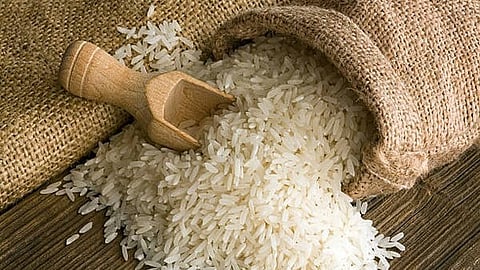

CHANDIGARH: With the Iranian rial touching a new all-time low against the US dollar, the Iranian government has stopped providing subsidies on Indian basmati imports, forcing exporters to put on hold their shipments. Consignments of aromatic basmati rice worth approximately Rs 2000 crore to Iran are now facing uncertainty as they are stuck at international ports awaiting clearance for shipment, affecting exporters and rice millers in Punjab and Haryana.
Iran is the second-highest importer of Indian basmati after Saudi Arabia, with the sela (parboiled) variety particularly cherished there as it imports around 12 lakh tonnes annually, valued at about Rs 12,000 crore. The 1509 and 1718 varieties known for their long grain and aroma, produced in Punjab and Haryana, are particularly popular in the Iranian market. The prices of the basmati varieties have already fallen by Rs 4 per kilogram.
Before the Iran–Israel conflict, the exchange rate was around 90,000 rial to a US dollar. But now it has dipped and stands at approximately 1,50,000 rial per dollar, making imports significantly more expensive for Iran. Earlier, the Iranian government had been giving a preferential rate of 28,500 rial per US dollar for food imports, but now this concession has been withdrawn.
In the 2023–24 fiscal year, a total of 59.42 lakh metric tonnes (LMT) of basmati rice was exported from the country. Of these exports, basmati rice was mainly sent to five countries: 7 LMT to Iran, 11 LMT to Saudi Arabia, 8 LMT to Iraq, 3 LMT to Yemen, and 3 LMT to the US.
Iran stops importing rice every June when its domestic crop comes into the market before reopening imports in September. Thus during the lean period, exporters in India procure stocks from rice millers. But the present situation has disrupted this cycle.
This development is likely to severely affect Punjab, the highest producer of basmati rice in the country, accounting for 40 per cent of production, followed by Haryana and other states. The prolonged uncertainty in exports has already affected rice millers, and if the situation persists, prices received by farmers are also expected to decline.
Talking to TNIE, Satish Goel, President of All India Rice Exporters Association, said, "We export around one million tonnes of basmati to Iran which is approximately 15 to 16 per cent of total global export from India. But due to the present tensions between US and Iran and the protests and instability in that country, the Iranian currency has sharply fallen against the US dollar and is at a record low. Thus the Iranian government has stopped giving subsidies on Indian basmati imports, which have been there for decades. This has made exporters reluctant to send their consignments and carry on further trade with Iran."
He added, "We are now adopting a wait and watch policy till the situation clears as there is uncertainty. We are unable to contact the importers there due to the unrest and only when the situation is clear can we decide how to proceed further."
Another basmati exporter on condition of anonymity said, "Earlier there was barter trade between India and Iran. But that arrangement ended after India stopped importing oil from Iran. Despite that, Iran continued to import tea, basmati rice and medicines from India, but now it appears that these imports are also being curtailed," he said.
"Due to the present situation, now around Rs 2,000 crore worth of export orders are hanging in the balance as no one knows how the situation will develop in the coming days. We are just keeping our fingers crossed," the exporter claimed.
According to APEDA, India’s foreign exchange earnings from basmati rice exports were Rs 48,000 crore in 2022, out of which Punjab contributed at least 40 per cent.
The protests in Iran, which began over economic woes, have now become a nationwide agitation against the falling economy and the weakening of the Iranian rial. Large crowds of anti-government demonstrators poured onto the streets of Tehran and several other Iranian cities on Thursday evening, marking what observers describe as the most significant show of opposition to Iran’s clerical leadership in years, which has been ongoing for two weeks. The protests continued on Friday with demonstrations taking place across the country.
