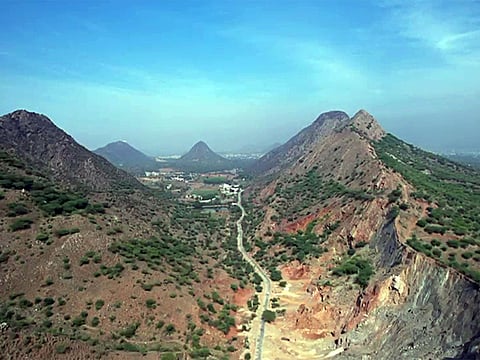

NEW DELHI: A report highlighting the threat of water bodies in the Aravalli range revealed that 20 per cent of the region's water bodies have diminished over the past several decades.
The report also revealed that the remaining water bodies are primarily eutrophic, silted, or only functional during certain seasons, severely limiting their capacity for groundwater recharge.
The hydrological mapping included in the report indicated multiple signs of distress across the Aravalli areas, which span four states and extend for 670 km from the southwest to the northeast.
It states that the Aravalli region has experienced a 20 per cent loss of water bodies over the years, with seven out of 41 ponds having disappeared.
This report, which is scheduled to be released on Wednesday, was prepared by the Sankala Foundation, a non-profit organisation that acts as a knowledge partner for the Haryana government in the Aravalli Green Wall Project.
The findings emphasised the urgent need for conservation and restoration efforts to protect these vital water resources.
Geospatial analysis of the region indicates that the Aravallis are facing rapid land-use changes, declining vegetation cover, depletion of soil moisture, and expanding urban heat island effects.
The distress in the Aravalli region is attributed to a combination of anthropogenic pressure and ecological decline, which has negatively impacted the quality of flora and fauna in the area.
The report also noted that villages and communities across the Aravalli region heavily rely on forests and common lands for fodder, fuelwood, grazing, and other biomass needs.
The report recommends targeted ecological interventions instead of generic plantation-based approaches. It suggests promoting natural regeneration and habitat enhancement in the Aravalli to conserve flora and fauna.
Additionally, it advocates for the use of technology, such as Geographic Information Systems (GIS), to ensure transparency in ecological monitoring.
The report also encourages innovative agricultural practices, the adoption of water-saving technologies, and the incorporation of traditional ecological knowledge to engage local communities in these efforts.
"Together, these elements create a robust foundation for successful eco-restoration," the report states.