
KUTCH: At first glance, Kutch appears forbidding — an arid frontier of salt deserts, scant rainfall, and settlements clinging to the edge of habitability. Long dismissed as barren and peripheral, the region today tells one of India’s most striking stories of transformation. Here, geological deep time, ancient civilisation, modern industry, and tourism converge. What once seemed a liability has been reimagined as an advantage.
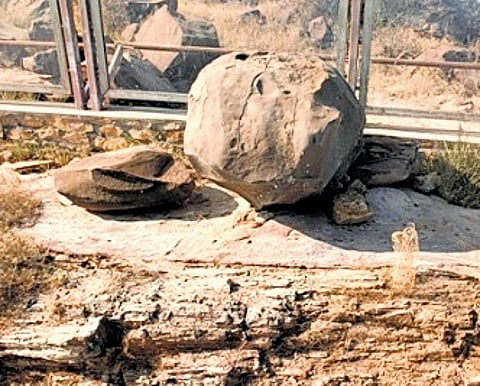
The story begins millions of years ago. The Rann of Kutch was once a shallow marine basin connected to the Arabian Sea. Tectonic shifts and climatic change drained the waters, leaving the Great and Little Rann — landscapes of seasonal flooding and blinding winter desiccation. Near Dholavira, the Akal Wood Fossil Park preserves 100-million-year-old fossilised tree trunks, some over thirteen metres long, proof that dense forests once thrived here. As a National Geological Monument, it anchors Kutch in Earth’s prehistoric narrative.
Millennia later, this harsh terrain was home to Dholavira, one of the Indus Valley Civilization’s largest and most sophisticated cities. Occupied between roughly 3000 and 1500 BCE, the settlement reveals meticulous planning and perhaps the Harappan world’s most advanced water management system. Stone reservoirs captured seasonal runoff, sustaining urban life under scarcity. Its inscription in the undeciphered Indus script and evidence of craft and trade networks reflect the Kutchi theme: scarcity met with innovation.
The motif resurfaced after the devastating earthquake of 26 January 2001. Amid collapse and falling land values, renewal emerged. Welspun City near Anjar, built in 2004, transformed disaster-scarred land into a vast industrial township. Producing globally exported textiles and large-scale pipes, it reshaped employment, infrastructure, and social geography while addressing ecological limits through recycling and green buffers.
Kutch today is a layered time made visible — fossils, cities and factories bound by vision. The writer was part of a sponsored tour in Gujarat
