
NEW DELHI: A quick succession of two spells of Western Disturbance (WD) will impact northwest and central India from January 31 to February 3, bringing another round of widespread, though moderate, snowfall and rainfall. A temperature drop of 2–4°C over the next few days is expected to create cold wave conditions in certain parts of the northwest.
The first WD is set to arrive on January 31, followed by the second on February 2. The India Meteorological Department (IMD) has predicted light to moderate scattered but widespread rainfall and snowfall over the western Himalayan region, along with light to moderate isolated or scattered rainfall over the adjoining plains of northwest and central India during this period.
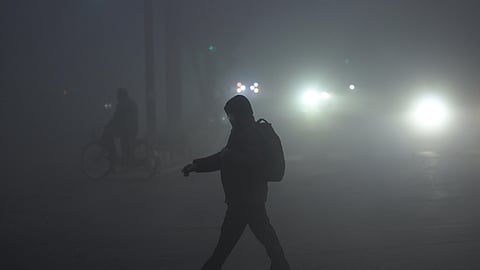
Dense fog is also likely during morning hours in isolated pockets of northwest and central India until January 31. Cold wave conditions are expected in isolated areas of Punjab, Haryana and Chandigarh on January 30 and 31. The IMD has forecast that cold wave conditions will cease by the second week of February, with temperatures returning to normal or above normal levels.
For the first time this winter season, two major wet spells associated with WDs occurred between January 22–24 and January 26–28. These events were accompanied by thunderstorms, moderate rainfall and snowfall, along with gusty winds and hailstorms across northwest India, including Delhi. The weather activity triggered another spell of cold wave conditions in the region.
The recent wet spells have eased a prolonged dry period of over three months in the northwest. As a result, the monthly rainfall deficit for the region has been reduced to zero, while the overall nationwide deficit has declined to 23%. The highest deficits for January have been reported in east and northeast India (-89%) and central India (-76%).
In its agromet advisories, the IMD has advised farmers to take precautions to drain excess water from fields of wheat, mustard, chickpea, peas and vegetables in Jammu and Kashmir, Himachal Pradesh and Punjab. Farmers have also been advised to gently shake trees to remove snow from branches.
In Uttarakhand, Punjab and Haryana, the IMD has recommended light and frequent irrigation to standing crops during evening hours to protect them from low-temperature stress and cold injury.