
DEHRADUN: The Uttarakhand Forestry Training Academy (UFTA) is set to undergo a major overhaul, with a comprehensive five year modernisation plan aimed at equipping forest officials with advanced tools to address growing challenges such as human wildlife conflict, forest fires and afforestation in difficult terrain.
A key component of the proposed upgrade is the creation of a state of the art Learning Centre, envisioned as a global knowledge hub.
The facility will integrate international forestry research and successful conservation models, enabling trainees to stay updated on contemporary practices in forest management.
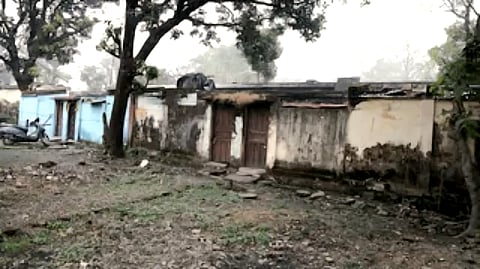
Speaking to TNIE, UFTA Director Sanjiv Chaturvedi underlined the urgency of the revamp. “The current campus infrastructure has outlived its utility,” he said. “We have several residential quarters, including Type A, B, C and D buildings, and hostels such as Hornbill and Monal, which are decades old and require phased replacement.”
Alongside infrastructure renewal, the academy plans to shift its academic focus towards technology driven learning.
Trainees will be taught the practical application of Artificial Intelligence in forestry management, moving beyond textbook based instruction.
The revised curriculum will incorporate real world case studies on livelihood generation and successful forestry experiments conducted within Uttarakhand.
Field based training will also receive a boost with plans to replace the academy’s ageing transport fleet. “Our current buses date back to 2011. We intend to procure three to four new vehicles to ensure trainees can reach remote forest divisions for essential practical exposure,” Chaturvedi added.
The modernisation blueprint further includes improved amenities to enhance trainee welfare, such as a new cafeteria, estimated to cost Rs 10 lakh, and a swimming pool.
At present, the campus does not have a dedicated social space for trainees beyond the mess halls.
“The entire campus transformation will be carried out in a phased manner over five years due to the significant budget requirements. Our goal is to begin work as soon as the phased funding is cleared,” the Director said.
The proposal is scheduled to be reviewed at the next Executive Committee meeting, chaired by the Principal Chief Conservator of Forests, which is expected to take place next month.
The planned upgrade comes amid a sharp escalation in human wildlife conflict in Uttarakhand. Forest department data from 2000 to January 2026 paints what officials describe as a “very concerning picture”, with leopards emerging as the most lethal, accounting for 547 human deaths.
Other fatalities include 253 due to snake bites, 227 caused by elephants and 100 linked to tiger attacks.
The impact extends beyond fatalities. Leopards and bears have injured 2,059 and 1,941 people respectively, with the frequency of such incidents continuing to rise.
Despite the decade being only halfway through, injuries recorded since 2020 have already crossed more than half of the total reported in the previous twenty years.
Officials note that these figures point to a “constantly increasing” crisis, with over 1,245 deaths and thousands injured, underscoring the challenge of balancing wildlife conservation with human safety in the Himalayan foothills.
