
NEW DELHI: India has added two new sites—Chhari Dhand in Gujarat and Patna Bird Sanctuary in Uttar Pradesh—to the List of Wetlands of International Importance, also known as the Ramsar List.
This brings the total number of Ramsar Sites in the country to 98. Meanwhile, both sites are under threat from invasive species and pressure from religious tourists.
Chhari Dhand (Site No. 2588) is a seasonal saline wetland located between the arid grasslands of Banni and the salt flats of Kachchh.
During the monsoon season, it floods, creating extensive water bodies that serve as important habitats for a diverse array of plant and animal species.
Notable vegetation in Chhari Dhand includes Indian gum tragacanth (Sterculia urens) and the critically endangered Indian bdellium-tree (Commiphorawightii), both of which are well-adapted to arid conditions typical of the region.
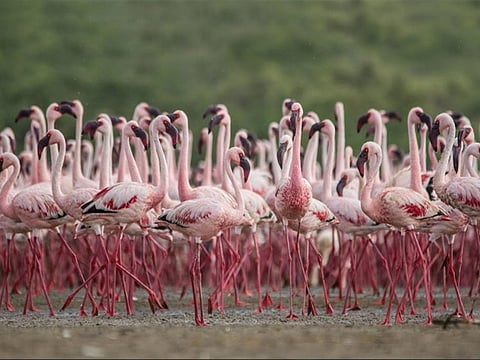
This site is also a significant wintering ground for waterfowl, supporting species such as the critically endangered sociable lapwing (Vanellusgregarius) and the vulnerable common pochard (Aythya ferina), including approximately 30,000 common cranes (Grus grus) each year.
While invasive species pose a considerable threat to the wetland, restoration plans have been established in collaboration with local government agencies, non-governmental organizations (NGOs), and community groups to tackle these challenges and promote long-term conservation.
The Patna Bird Sanctuary (Site No. 2589) in Uttar Pradesh features freshwater marshes, woodlands, and grasslands, all of which are surrounded by agricultural landscapes. This variety of habitats supports a rich biodiversity, with 178 bird species and 252 plant species recorded in the area.
Patna Bird Sanctuary is especially vital for waterbird populations and has been designated as an Important Bird and Biodiversity Area (IBA) by BirdLife International. It also provides habitat for larger species, including the regionally vulnerable broad-snouted crocodile (Crocodylus palustris).
The sanctuary is a popular destination for religious tourism and nature-based recreation. However, these activities, along with threats from invasive species, exert considerable pressure on the site.
Conservation measures are being implemented to mitigate these challenges, including the regular removal of invasive plants, regulation and monitoring of tourism activities, and ongoing monitoring of migratory birds and avian influenza.
