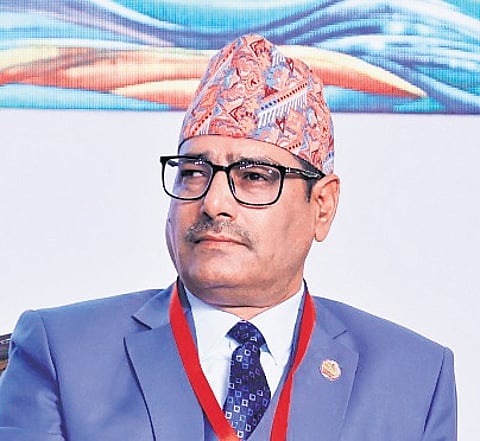

Describing the upcoming elections in Nepal as “historic,” Madhav Prasad Chaulagain, the country’s Cabinet Minister for Forests and Environment, emphasised India’s key role in supporting Nepal’s peaceful transition to democracy.
In an interview with TNIE during the World Sustainable Development Summit 2026 in Delhi, he elaborated on how the recent Memorandum of Understanding between the two nations is pivotal for enhancing intelligence-sharing to combat poaching, managing natural resources and addressing water-sharing concerns. Excerpts:
What is the status of the upcoming election in Nepal, and how does the Nepalese government view India’s support during this period?
We are prepared to conduct a “historic” election on March 5. Despite facing challenges six months ago, we have worked hard to improve the situation. Since last September, following the Gen Z revolution, we have focussed on restoring the people’s faith in our system. Our interim government is committed to ensuring security and providing adequate resources to facilitate a fair electoral process. During this process, we have received constructive support from India to help ensure a democratic transition. The Indian government has been generous in providing assistance to ensure the elections are held on schedule.
What is your opinion on the emerging issues related to water sharing and rainfall data-sharing?
I don’t see them as major issues. For long, we have been working together in good faith, and I don’t identify any significant concerns between the two countries. But if there are any issues, perhaps the newly elected government will address them once it comes to power.
India and Nepal have signed an MoU. Could you elaborate on the details?
India and Nepal have signed an MoU focused on biodiversity conservation. This agreement highlights their deep cultural ties and significant nature-based connections. India and Nepal are linked by approximately 700 km of the Terai Arc Landscape, which includes eight conservation areas, including national parks, wildlife sanctuaries and animal corridors along the border.
For example, there is a cross-border corridor that connects Bardia National Park in Nepal with Katarniaghat Wildlife Sanctuary in Uttar Pradesh. This forested link allows tigers, rhinoceroses and elephants to migrate seasonally across the borders.
There are other significant corridors. Also, both countries share ecosystems, including Himalayan and sub-Himalayan conservation regions, riverine wetlands, grasslands and floodplain systems. It is essential to manage these natural resources to mitigate climate change. To achieve this, we need to develop a scientific approach to resource management.
There has been a rise in wildlife crime in both countries recently. How do you view the rise of wildlife crime involving poachers taking shelter in Nepal after committing a crime in Indian forests?
The current MoU aims to address cross-border wildlife crime. Our main focus will be on building the capacity of our staff, professionals and local communities. We have agreed to establish common understandings that will allow us to exchange knowledge, utilise tech and meet regularly. This MoU will also facilitate the exchange of intelligence and information related to poachers between the two countries.
Does Nepal have any special mechanisms to counter future wildlife crime?
We’ve two dedicated security layers. The Nepal Army is deployed in conservation areas, particularly in national parks near the border. In addition, we have a semi-militarised force known as the Shashastra Ban Rakshak (SB), or Armed Forest Protectors. The SB is specifically tasked with preventing poaching activities.
How will this MoU enable the collaboration between the two countries in conservation?
Before this Memorandum of Understanding (MoU), any collaboration on research or surveillance required us to seek approval from the central authorities for any bilateral meetings between the two sides. This process often delayed our efforts and made collaboration cumbersome, allowing organized poachers to take advantage of the situation. Now, with the MoU in place, we can hold regular meetings between the two parties. We can even organize meetings on short notice if an urgent issue arises. The MoU will facilitate the exchange of intelligence, information, and knowledge, as well as the sharing of technologies.
