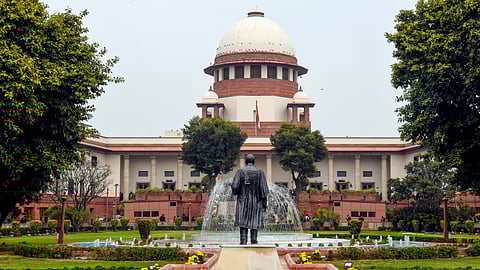

NEW DELHI: The Supreme Court of India on Friday refused to entertain a public interest litigation seeking directions to introduce menstrual leave for women students and workers across the country, observing that such a mandate could have unintended consequences for women’s employment.
A bench headed by Chief Justice of India Surya Kant said that making menstrual leave mandatory through law might lead employers to hesitate in hiring women.
“These pleas are made to create fear, to call women inferior and that menstruation is something bad happening to them. No one would give them jobs in such a scenario. This is projected as an affirmative right. But one must also think about the employer who has to grant paid leave,” the bench observed.
The court was hearing a PIL filed by advocate Shailendra Mani Tripathi seeking directions for monthly leave for female students and working women during their menstrual period.
While declining to pass any directions on the plea, the court asked the petitioner to approach the competent authority with a representation. It said the concerned authorities could examine the possibility of framing a policy on menstrual leave after consulting relevant stakeholders.
The bench also noted that creating specific legal provisions or guidelines could unintentionally reinforce stereotypes about women.
During the hearing, senior advocate M R Shamshad, appearing for the petitioner, argued that some states and institutions had already taken steps to accommodate menstrual leave.
He told the court that certain relaxations had been introduced in schools in Kerala and that several private companies have voluntarily provided menstrual leave to employees.
Responding to the submission, the bench said voluntary policies were welcome but cautioned that making such provisions mandatory by law could discourage employers from hiring women.
"Nobody will take them in the judiciary or government jobs, their career will be over. They will say you should sit at home after informing everyone,” the CJI said.
In his petition, Tripathi argued that while laws exist to support women during maternity, the menstrual period, which he described as the initial stage linked to maternity, has largely been ignored in policymaking.
The plea also pointed out that Bihar has been providing two days of special menstrual pain leave to women employees since 1992. It further cited a historical example from 1912 when the Government Girls School in Tripunithura in the erstwhile princely state of Cochin allowed students to take “period leave” during annual examinations and appear for them later.