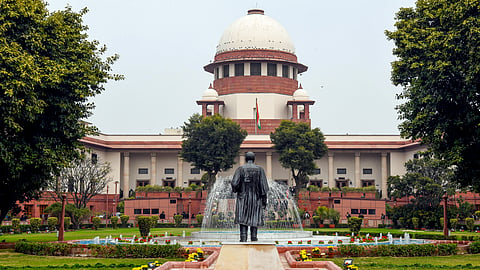

NEW DELHI: On the 13th day of hearing in the Sabarimala reference case, the Supreme Court on Thursday observed that courts interfering in matters of religion and religious practices could effectively disrupt religions and, therefore, should exercise caution while dealing with such cases.
“If everybody starts questioning certain religious practices or matters of religion before a Constitutional Court, then what happens to this civilisation where religion is so intimately connected with Indian society? There will be hundreds of petitions questioning this right, that right, opening of temples, closure of temples... we are very, very conscious of this,” said Justice BV Nagarathna.
She remarked that India is a civilisation marked by pluralities and diversities, even as it remains a sovereign democratic republic. The judge further stated that religion is deeply intimate to everyone in India.
“This is troubling us. We, nine judges, what we lay down is for a civilisation, that is India. India must progress. Despite all its development, economy, everything, there is a constant in us; we can’t break that constant. That is what is troubling us,” the judge added.
During the hearing on Thursday, the court also orally expressed concerns about the practice of Female Genital Mutilation (FGM) among sections of the Dawoodi Bohra community. The Court tagged the petitions challenging FGM with the Sabarimala reference case.
The hearing in the case remained inconclusive on Thursday and is likely to continue on Tuesday. The batch of petitions relates to discrimination against women in religions and at religious places.
