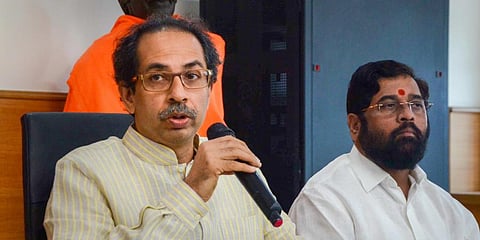

Months after the Shiv Sena, a regional party in Maharashtra, witnessed the most significant vertical split in its history with its senior leader Eknath Shinde defecting with 39 MLAs and 12 MPs, Maharashtra’s political scene has become murkier. The Election Commission’s interim order to freeze the name and symbol of Shiv Sena—and allot new names and symbols to both camps—has now set a fresh battleground for Uddhav Thackeray and Eknath Shinde to claim ownership over the idea of Shiv Sena as envisioned by its founder Bal Thackeray.
This column attempts to look at some key factors that led to the unprecedented defection in the Shiv Sena. It also attempts to unpack what lies ahead for both groups as the actual test of their might and political fortunes will lie in the upcoming elections to local bodies across the state.
While the magnitude of the rebellion in Shiv Sena sent shockwaves across the state, it was an outcome of a long time of discontent among leaders in the party. The party’s organisational structure is highly centralised and undemocratic and lacks any formal mechanism for conflict resolution. Since the beginning, decision-making rested with the Shiv Sena chief. Still, when Uddhav Thackeray took over the reins, he reportedly corporatised the top structure with several gatekeepers between local leaders and the top leadership, which is a major bone of contention for the Shinde group. Defected Sena leaders allege that when founder Bal Thackeray led the party, anyone from the smallest sainik to the most prominent leader had access to meet him and voice their concerns, a space that they say has shrunken today. This issue is particularly pronounced for leaders from rural Maharashtra who feel alienated in the decision-making process. Aaditya’s (Uddhav’s son) entry into the Shiv Sena and the importance given to young leaders in the party (most of whom come from elite urban backgrounds) has added fuel to the fire. It created a rift between the Old and the New Sena and also contributed to widening the urban-rural divide, which Shinde has used to his benefit. Having risen from the low ranks, Shinde gets an edge over the Thackerays as his story is aspirational for leaders and supporters.
After the formation of the Maha Vikas Aghadi (MVA) government post the 2019 state assembly elections, Uddhav Thackeray became the chief minister, with his son Aaditya getting a ministerial cabinet berth. Uddhav continued holding the position of Sena chief, which created a feeling that the Thackerays were not allowing any other leader to be at the helm of top power positions and organisational affairs. The mistrust and lack of communication widened during Covid-19, which restricted Uddhav’s physical engagement with people, party leaders and his MLAs. At the same time, MLAs were not content about the Nationalist Congress Party—an alliance partner in MVA—getting the lion’s share in crucial ministries and decision-making. Sena leaders were disappointed with this power dynamic as they had expected it to largely favour Uddhav at the helm. The BJP carefully tapped into the simmering discontent and strategically tried to topple the MVA government by lending a helping hand to Shinde. Existing discontent in the Sena and the fear of central agencies such as the ED and the IT Department pushed many leaders towards joining the rebellion when Shinde took the first step.
Shinde’s espousal of the aggressive Hindutva influenced by the BJP-RSS brand is now underlined as a key difference between the two Senas. While Uddhav’s calm demeanour and advocacy for an accommodative Hindutva and inclusive politics had some takers in the state, it wasn’t easy to digest for some leaders who emerged from and thrived on street politics. This poses two challenges, for the Uddhav-led Sena to strike a balance between its aggressive and accommodative posturing and to confront the BJP-RSS brand of fierce, aggressive Hindutva that commands a strong appeal among a considerable section of people across the country today.
On the one hand, Shinde has been successful in getting a majority of the elected representatives with him, while on the other, Uddhav has managed to keep control of the party organisation. The recent Dussehra rally highlighted that while the Shinde faction has leaders and the resources to stage optics, the Thackeray brand still significantly influences the loyal grassroots sainiks. However, a rebellion of this magnitude has shaken the party organisation and has challenged the position of the Thackerays.
For Uddhav-led Sena, the coming days will be the most critical ones in the Sena’s political journey of nearly six decades. The results of the upcoming local body elections shall determine its political fortunes. Uddhav’s attempt at rebuilding the party from scratch would require him to travel across the length and the breadth of the state, build the second rung of leadership, hear people’s grievances and understand local dynamics. Sena’s influence beyond the Mumbai-Thane belt is largely based on its local leadership. With many leaders from rural Maharashtra joining the Shinde camp, it is now a challenge for Uddhav’s Sena to build a new rung of local leadership. The Thackerays will also have to work on a war footing to bury the differences within its leadership and local cadre.
Fighting the resource clout that the BJP-Shinde group holds in unison, along with the appeal of aggressive Hindutva, is team Uddhav’s toughest hurdle. But this battle will be fought on the streets as creating a public perception in his favour and mobilising karyakartas will be its most crucial aspect. In its journey of 56 years, Shiv Sena has seen and overcome several crises—from the exit of some of its key leaders, such as Chhagan Bhujbal, Narayan Rane and Raj Thackeray, to its breakup with the long-term ally, the BJP. But this crisis is unprecedented because it has emerged from within its organisation. If it has to sail through this, it must look inside first.
Sanjay Patil
Works at the University of Mumbai and has been chronicling the Shiv Sena’s journey for the last ten years
