
Since 1991, when a new generation of economic reforms were initiated, Indian policymakers in successive governments have tried to strike a balance between attracting foreign direct investment (FDI) and protecting domestic businesses, especially small firms in many sectors. Unsurprisingly, this approach has not worked particularly well, though that has not prevented the government from persisting with this approach.
The retail industry is a good sector to understand why this approach typically fails. In the initial reform years, the government worried about what would happen to small neighbourhood retailers, especially grocers, if big-box formats of the kind that were popular in the US, Europe and Southeast Asian countries were to be allowed a free rein in the country.
Therefore, policymakers grudgingly allowed global single-brand retail players to enter the country—calculating that they posed the least threat to small Indian shopkeepers. Big multi-brand players such as Walmart or Carrefour were not allowed to sell directly to customers. Big-box retailers could only come in via the cash-and-carry route, where they sold to smaller shops. The reasoning was that this would be a win-win situation with FDI in retail coming in, while small grocers benefited by buying from the cash-and-carry giants and selling to consumers.
As it turned out, the final outcome has not been quite what the policymakers thought would happen. Domestic companies ushered in big-box retail though the global companies were kept off. Not every homegrown player succeeded. Some expanded quickly but eventually went bust. They were replaced quickly by others. Today, Reliance and the Tata Group are big players in big-box physical retail in several multi-brand formats. Others have also built a significant presence—Radhakishan Damani’s DMart in the groceries space is a good example. There are many others jostling for a slice of the pie.
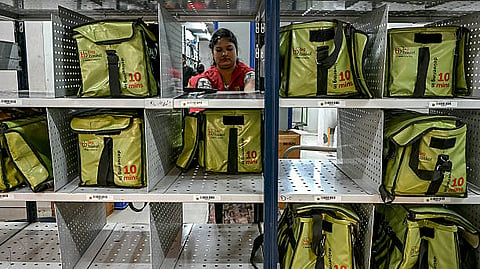
In all of this, the small mom-and-pop grocery stores have not been protected. Indeed, they face their biggest threat at present from the homegrown quick-commerce players who are setting up ‘dark stores’ with fast-moving inventory and offering a service that a small grocery often cannot. Between domestic players like Big Bazaar and quick-commerce players such as Blinkit and Zepto, small Indian grocers are facing exactly the kind of competition that the government thought it would protect them from.
Take the case of e-commerce. Here, the government has had multiple policy flipflops. Flipkart, started by domestic entrepreneurs, grew rapidly until capital requirements ensured that the founders sold to Walmart. Meanwhile, US giant Amazon set up and scaled up quickly. This has attracted big Indian groups such as Reliance and Tata to start their own online businesses.
The government has been unable to decide whether players such as Amazon or Flipkart are beneficial to smaller players or are competitors. In a bid to protect small Indian sellers, the government has said that Amazon and Flipkart cannot follow an inventory-led or hybrid model, and should act only as platforms for domestic and other sellers. It also developed the Open Network for Digital Commerce or ONDC, an open platform that is supposed to offer an alternative to Amazon and Flipkart. But so far ONDC has not quite taken off to the extent where it can challenge the big players.
Meanwhile, by not allowing Amazon and Flipkart to stock their own inventories and restricting global multi-brand big-box retailers from setting up physical outlets that can sell directly to consumers, the government has essentially throttled FDI in retail. Thus, only a fraction of the potential FDI is trickling in now.
Nor have the small players been protected. It is hard to argue that a Blinkit or a Reliance Smart Bazaar poses less of a threat to small players than an Amazon or a Walmart.
Instead of trying to strike a balance between FDI and protecting small domestic players, neither of which it has managed to do particularly well, the policymakers should perhaps focus on one area they have ignored—the final consumer. Taking a consumer-first approach would lead to investments and technology flowing in while letting the market evolve, as it has in other countries.
By focusing on the consumer, the government would realise that physical big-box formats and online players are not two separate categories—they are both serving the same customers, as are small-format domestic players. This would lead to regulations that are fair to all players.
If the government really wants to help and protect small players, the ideal way is not by creating artificial distinctions in retail or a regulatory maze for global players, but by offering small businessmen the one thing they lack—easy access to cheap capital.
The real battle between small mom-and-pop shops and modern retail formats lies in the amount of capital that can be deployed in offering customers the best deal. Whether it is a big business conglomerate like Reliance or Tata, or venture-capital funded startups such as Blinkit and Zepto, the threat they pose is the same. The only way smaller traditional players can compete is if they can also access capital cheaply. This could mean incentive or special plans while keeping overall retail regulations the same for every player. This would be a win for customers, as well as for the government and players.
Prosenjit Datta | Former editor, commentator on economic issues
(Views are personal)
(datta.prosenjit@gmail.com)
