
Developing human capital will be at the heart of India’s journey towards a Viksit Bharat at 2047. As we approach the Union Budget for 2026-27, a coherent strategy linking education, health, employment and skill development is essential. These pillars form the architecture of a productive, resilient and inclusive society, one that can sustain high growth and global competitiveness over the coming decades.
A healthy and skilled population is central to realising India’s potential as a knowledge-driven, innovation-led economy. Strengthening the health system is a natural starting point. A more decentralised, outcome-linked financing model where central transfers are tied to measurable improvements would allow states greater autonomy while ensuring accountability and real-time monitoring. This approach can help ensure that every rupee spent on health yields tangible results on the ground.
Equally important is addressing the acute shortage of healthcare professionals. Enforcing quality standards under the Clinical Establishments (Registration and Regulation) Act, 2010 through certified professionals supported on an interim basis by the central health regulators NABH and NHA can help raise standards nationwide. At the same time, India must make healthcare careers more aspirational. Structured pathways for task-shifting, where routine clinical responsibilities are reassigned to trained doctors, nurses, and allied health practitioners can alleviate specialist shortages. This should be complemented with civil services-recognised upskilling routes and expanded opportunities for senior secondary students and graduates to enter the healthcare ecosystem through clear progression ladders.
Modernising regulatory frameworks is also essential. A single national licence for online healthcare players covering e-pharmacies, e-diagnostics, and digital clinics would bring long-needed clarity. Updated provisions under the Drugs and Cosmetics Act for telemedicine and digital therapeutics, alongside tax parity for e-hospitals, will ensure that India’s evolving health-tech ecosystem is supported by contemporary rules.
On the education front, India needs a predictable, long-term expenditure roadmap. A phased increase in public spending from 4.6 percent of GDP in 2026-27 to 6 percent by 2030-31 would provide the financial foundation needed to strengthen schools, teacher training and research. A national task-force on education technology and inclusion can accelerate the adoption of public-private partnership models for platforms such as DIKSHA and SWAYAM, while also helping modernise curriculums and expand high-quality digital content.
Higher education, too, warrants a shift from prescriptive regulations to principle-based advisory. Allowing institutions to self-declare adherence to regulatory guidelines can promote autonomy and global best practices. India should also move decisively to facilitate the entry of foreign university campuses through streamlined approvals, stronger industry linkages, and scholarship-backed access for students replicating Gujarat’s GIFT City education hub model in other regions.
Creating jobs at scale will require fresh thinking in employment and skilling. A comprehensive national policy for the gig economy can help extend social protection, strengthen worker registration systems, and ensure continuity of benefits across platforms. Pilot urban employment guarantee programmes in select cities can provide short-term work opportunities while boosting civic infrastructure.
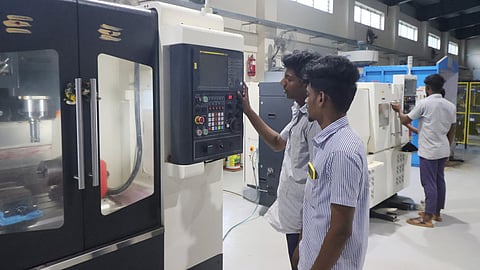
Expanding apprenticeships is another high-impact lever. A service sector apprenticeship programme covering hospitality, logistics, retail, healthcare, and financial services can offer 12-18 month fixed-term pathways combining on-the-job training, digital skills modules and recognised certification. Industry-led consortia can help smaller businesses to participate effectively by offering curriculum support and shared training facilities.
For the long term, India must prepare its workforce for future industries. A Future Skills 2047 Mission to train or reskill 10 million youth annually in areas such as AI, robotics, clean energy, biotechnology and semiconductors will be crucial. Cluster-based integrated skill development centres aligned to regional industry needs can serve as the backbone of this mission.
Women’s economic participation remains one of India’s biggest untapped opportunities. Investments in childcare, safe and reliable transport, and affordable accommodation can help bring millions of women into the workforce and strengthen household incomes and productivity.
Finally, a universal labour information management system linked to the National Career Service can serve as a unified employment-intelligence layer. When combined with an integrated skilling dashboard, drawing real-time data from state missions and government portals, it can allow policymakers, employers, and workers to navigate labour markets with unprecedented precision.
As India stands at a defining moment in its development journey, the upcoming Union Budget provides a crucial opportunity to act on these priorities that the Confederation of Indian Industry has submitted in its pre-budget proposals. By linking health financing to outcomes, investing in education and research, and empowering women and youth through skills, we can lay the foundation for a globally competitive, equitable and future-ready workforce—one capable of driving the nation towards Viksit Bharat @ 2047.
Chandrajit Banerjee | Director General, Confederation of Indian Industry
(Views are personal)
(cb@cii.in)
